Parts & Repairs
Broken Garage Door Spring Repair
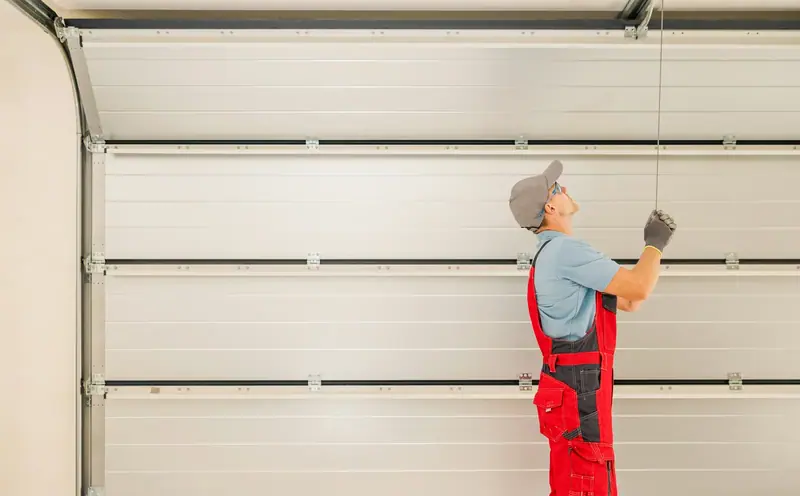
Fast, correct replacement of snapped torsion and extension springs, sized to the door and balanced before we leave.
Learn moreNashotah, Wisconsin · Lake Country
Nashotah Garage Door installs, repairs and replaces garage doors and openers for homes and businesses around Nashotah. We measure twice, explain what we find in plain language, and set every door up for a Wisconsin winter, not a showroom floor.

open-and-close cycles is the rating on a standard torsion spring. A busy household can use that up in six or seven years.
cycles a year is typical when the garage is the main way in and out of the house, which it is for most families here.
is the highest a safety sensor should sit above the floor. It is also exactly where snow, leaves and salt spray collect.
individual services, each with its own page on this site, so you can read about the exact problem you have.
Who we are
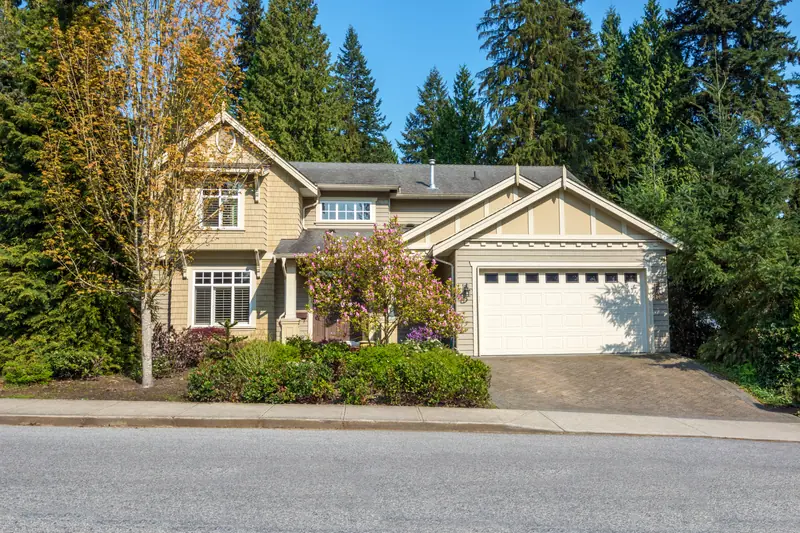
Most homes around here use the garage door as the front door. Kids leave through it for the bus, groceries come in through it, and in February it is the only thing standing between a heated mudroom and a north wind coming off the lake. A door that sees that much use deserves more attention than it usually gets.
Nashotah Garage Door is a local service for exactly that door. We install new garage doors, replace tired ones, repair the parts that wear out, and service the openers that move them. The work covers everyday steel doors on ranch homes, insulated doors on attached garages, carriage house and custom wood doors on lake properties, and the overhead doors on shops, barns and commercial buildings in the surrounding area.
What we care about is the part you do not see from the driveway: correct spring sizing, tracks that are plumb and properly anchored, cables that wind evenly, seals that actually touch the floor, and an opener that is set to lift a balanced door instead of dragging a heavy one. Get those right and a door runs quietly for years. Get them wrong and you are calling someone every winter.
More about how we workResidential garage door services
Residential work is most of what we do. Some calls are simple: a remote that quit, a seal that tore, a door that got loud. Others are bigger decisions, like whether a twenty-year-old door is worth another repair. Either way you get the same thing from us: a look at the whole system, a clear explanation, and a recommendation we would follow on our own house.
Garage door installation
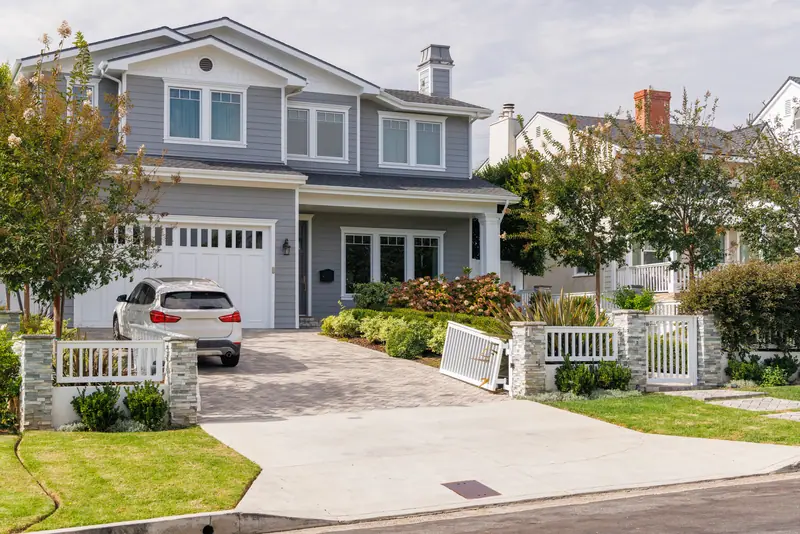
Two identical doors can behave completely differently depending on who installed them. The difference is in the framing and the setup. Before we order anything we measure the opening width and height, the headroom above it, the side room, and the depth back into the garage. We check whether the header is level and whether the floor is, because most slabs around here have settled a little or been heaved by frost at one corner.
On installation day the tracks go up plumb and square to the opening, the sections are stacked and hinged, and the spring system is wound to the actual weight of your door rather than a number off a chart. We set the bottom seal to the floor you have, not the floor the plans assumed. Then we cycle the door by hand before the opener ever touches it. If it does not stay put at waist height on its own, it is not finished.
Garage door repair
A garage door is a simple machine with a lot of moving pieces, and nearly every one of them can be repaired or swapped on its own. We would rather fix a sound door than sell you a new one.
Repair calls tend to sound alike on the phone: “it will not open,” “it is crooked,” “it makes a terrible noise.” The causes are more specific. A door that suddenly weighs a ton has a broken spring. One that hangs lower on one side usually has a cable that slipped off its drum or frayed through. A door that reverses on the way down in cold weather often has nothing wrong with it except stiff grease, a frost-heaved floor, or a sensor knocked sideways by a snow shovel.
We start every repair by disconnecting the opener and running the door by hand. That one test tells us whether the problem is in the door or in the motor, and it stops us from replacing an opener that was only struggling because the springs were tired. From there we check the springs, cables, drums, rollers, hinges, tracks and fasteners in order, and we show you what we found before we quote anything.
The common fixes each have a page of their own if you want detail before you call: torsion spring replacement, cable repair, roller replacement, track repair, panel repair and off-track repair. If the door is stuck open, will not lock, or came down on something, read the emergency repair page and call us instead of forcing it.
One honest note. Springs and cables hold enough stored energy to cause serious injury, and they are the two parts homeowners most often try to handle themselves. Please do not. Lubricating hinges and wiping the sensors is fair game. Anything attached to a spring, a cable or the bottom bracket is a job for someone with winding bars and the training to use them.
Parts & Repairs
Fast, correct replacement of snapped torsion and extension springs, sized to the door and balanced before we leave.
Learn moreParts & Repairs
Frayed, slack or snapped lift cables replaced as a pair, with the drums, pulleys and bottom brackets inspected for the cause.
Learn moreParts & Repairs
Bent, loose and misaligned tracks straightened, re-anchored or replaced so the rollers run freely and the door seals.
Learn more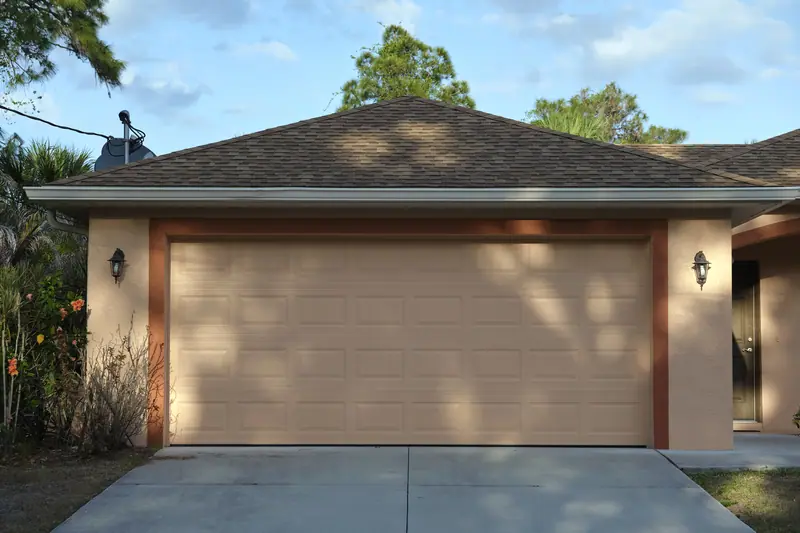
Garage door replacement
There is a point where repair money stops making sense. We look for a few specific signs: steel skins that have rusted through along the bottom section, wood that has gone soft at the joints, panels that have cracked around the hinges, or an uninsulated door on a garage that now has a bedroom over it. A door that has been hit and bent across more than one section is usually in the same category.
Replacement is also the easiest way to change how a house looks from the road. The garage door is often a third of the front elevation, and going from a dented flat panel to a well-proportioned carriage or raised-panel door changes the whole face of the home. We will bring up practical points you might not think of, such as whether the existing opener and tracks are worth keeping, how window placement affects privacy, and which finishes hold up to road salt.
If you are weighing it up, the replacement page lays out how we decide between repairing and replacing, and what a typical replacement day involves.
Repair or replace?
Garage door openers
An opener does not really lift a garage door. The springs do. The opener just guides a balanced door up and down and stops it when something is in the way. That is why we check the door first on every opener call, and why a new motor on an unbalanced door is money wasted.
When an opener does need attention, the usual suspects are worn drive gears, a stripped trolley, a failed capacitor, a logic board damaged by a power surge, or travel and force settings that have drifted. Many of those are repairable. When the unit is old enough that parts are scarce, or it predates modern safety sensors and rolling-code remotes, replacement is the better call.
For new units we will talk through belt drive versus chain drive, wall-mounted jackshaft openers for garages with storage or high ceilings, battery backup for the outages that come with ice storms, and smart controls that let you check the door from your phone when you are halfway to the cottage and cannot remember closing it.
Custom garage door solutions
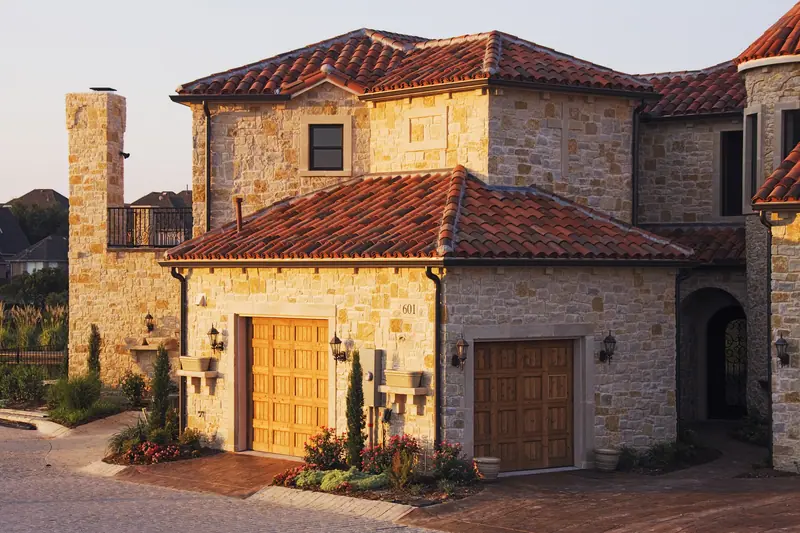
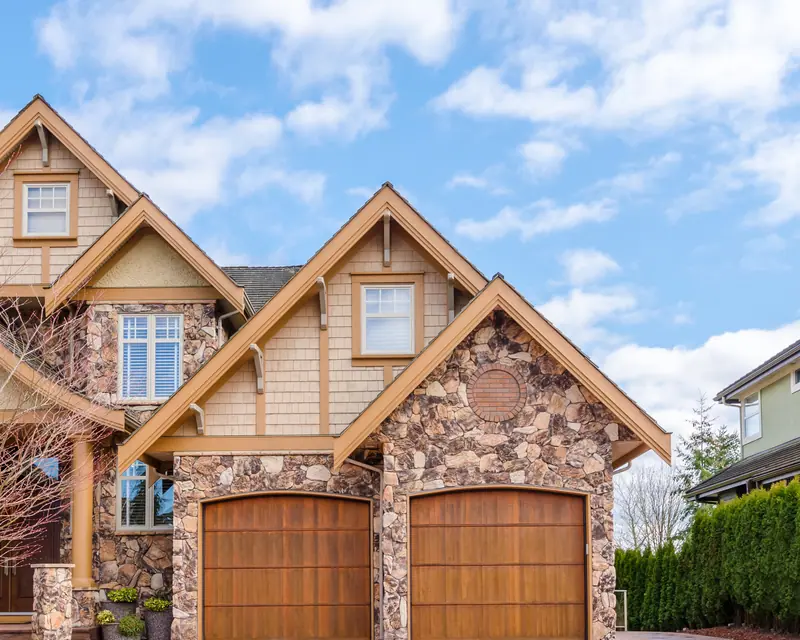
Lake Country has more architectural variety than most places its size: stone and timber lake homes, shingled cottages, farmhouses, mid-century ranches and new modern builds tucked into the trees. A stock white door suits some of them. Many deserve better.
Custom work starts with the building. We look at the roof pitch, the window grids, the trim color, the stone or siding, and how the garage sits relative to the entry. Then we work out a door that belongs there. That might be a stained cedar or mahogany door built to an odd opening, a carriage house design with real strap hardware, a flush modern door in a dark matte finish, or a full-view aluminum and glass door on a workshop that wants daylight.
Material matters as much as style in this climate. Real wood is beautiful and needs upkeep, especially on a south or west face. Steel with a wood-grain overlay gets close to the look with far less maintenance. Fiberglass and composite claddings resist moisture near the water. We will lay out the trade-offs honestly, including the ones that cost us a sale.
Custom doors are also heavier and often taller than standard ones, so the hardware has to follow: heavier-gauge track, correctly calculated springs, and an opener with the right rail and enough reserve. That engineering is where a custom project either succeeds or becomes a maintenance problem.
Commercial garage door services
A commercial door that will not open is not an inconvenience. It is a truck that cannot leave, a delivery that cannot come in, or a building that cannot be locked at night. We treat commercial calls with that in mind.
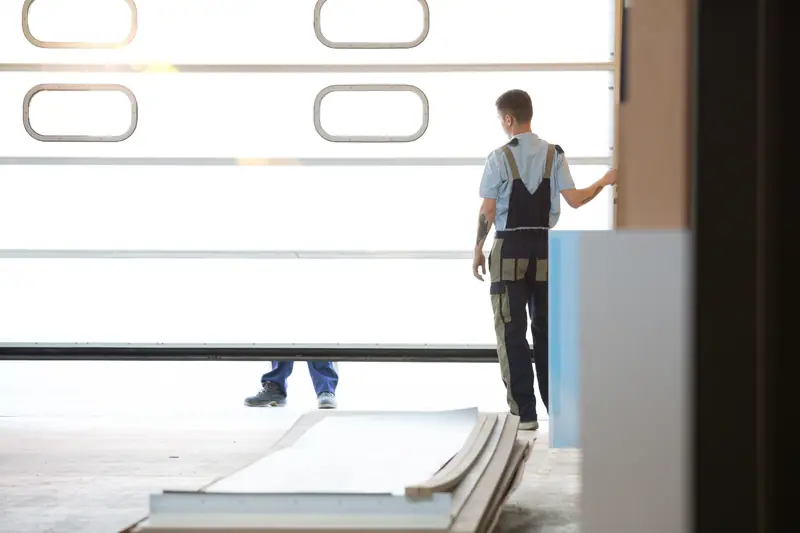
Our commercial work covers sectional overhead doors, rolling steel and roll-up doors, and the operators that drive them. Around Nashotah that means contractor shops, auto and marine service bays, storage buildings, light industrial units along the highway corridors, and a good number of agricultural buildings where a door has to cope with dust, livestock moisture and equipment that barely fits through it.
Commercial doors cycle far more often than residential ones and the parts are sized accordingly. High-cycle springs, heavier track and scheduled maintenance are what keep them out of trouble. If your doors have never been on a maintenance schedule, that is the place to start.
Our installation and repair process
Whether it is a ten-minute sensor adjustment or a custom door on a new build, the job follows the same order.
You tell us what the door is doing and when it started. We inspect the whole system, including the parts that are not causing trouble yet, and test the door by hand with the opener disconnected.
We show you what we found, explain the options in everyday terms, and give you the price before any work begins. If a cheaper repair will do the job, that is the one we recommend.
Correct parts, correct fasteners, correct spring tension. Floors and vehicles are protected, old parts are removed, and nothing is left half-adjusted “to settle in.”
We check balance, travel limits, force settings and the safety reversal, then run the door with you watching. You will know what was done and what to keep an eye on.
Why choose professional garage door service
It is fair to ask why a door repair should cost more than the part. Here is where the difference goes.
A wound torsion spring can break a wrist or worse. Bottom brackets are under full cable tension. Professionals use the proper bars, clamp the door, and release tension in a controlled way every time.
A frayed cable is often the result of a worn drum or a bent track. Replace only the cable and it frays again. Knowing what to look for upstream is most of the job.
Springs are chosen by wire size, inside diameter and length to match a specific door weight. A close-enough spring makes the opener work harder and wears out early.
Track spacing, cable tension, limit settings and opener force all interact. Set together, the door runs smoothly. Set one at a time by trial and error, it never quite does.
A door that drops, jams or reverses unpredictably damages panels, burns out motors and occasionally lands on a bumper. Proper setup is cheap insurance against all three.
Most repairs are finished in a single visit because the right parts and tools arrive with the technician. A weekend of trial and error rarely ends as well.
Garage door maintenance
Garage doors fail gradually and then all at once. Rollers get rough, hinges loosen, lubricant dries out, springs lose a few pounds of lift each season, and the opener quietly compensates until something gives. Maintenance is simply catching those things while they are still small.
A proper tune-up includes tightening hardware, lubricating the springs, bearings, hinges and rollers with the right product, checking cable condition and drum set screws, testing door balance, cleaning and aligning the photo-eyes, and verifying that the door reverses on contact. We also look at the weather seals and the bottom of the door for early rust.
We suggest one visit in the fall, before the cold, and a lighter check in spring once the salt and grit of winter have done their work. If you would rather do some of it yourself, here is what is safe for a homeowner:

Wisconsin weather and your garage door
Few places ask more of a garage door than southeastern Wisconsin. Steel contracts in the cold, so springs get stiffer and lose a little lift. Lubricants thicken. Rubber seals harden and crack. Meltwater runs under the door in the afternoon and freezes it to the slab overnight, and the next morning the opener tears the bottom seal trying to break it free.
Then spring comes, the frost leaves the ground, and slabs and driveways shift. A door that sealed perfectly in October can show daylight at one corner by April. Summer brings humidity, which swells wood doors and jambs, and the moisture that hangs around lakeside garages works steadily on bare steel, cable strands and spring coils.
None of this is unusual, and all of it can be planned for. Insulated doors with thermal breaks and good perimeter seals keep attached garages far warmer. galvanized or coated springs and stainless or galvanized cables resist corrosion. A flexible bottom seal in the right profile follows an uneven floor. And an opener with properly set force and a battery backup keeps working through the cold snap and the outage that often comes with it.
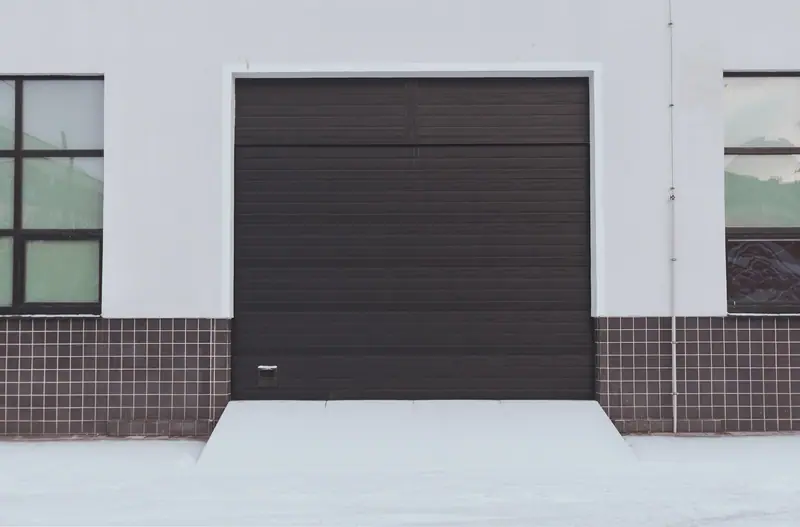
Frozen bottom seals, stiff springs, slow openers and sensors buried in snow. Clear the threshold, and never run the opener repeatedly against a door that is frozen down.
Frost heave shows up as gaps and binding. Road salt has had months to work on the bottom section and hardware. Rinse the door and have the balance checked.
Humidity swells wood and feeds rust. Storms bring wind loads and power surges that damage opener boards. A surge protector on the opener outlet is cheap.
The best time for a tune-up and new weather seals. Leaves collect at the sensors and in the tracks. Lubricate before the temperature drops.
Before-and-after gallery
Drag the handle on each image. These are illustrative comparisons made with licensed reference photos, chosen to show the kind of difference a replacement makes. They are not pictures of our customers' homes. Every service page has its own comparison.
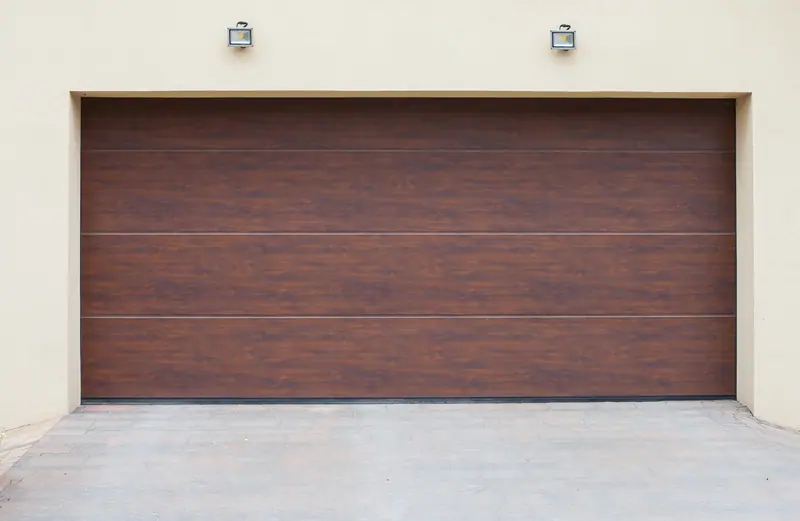
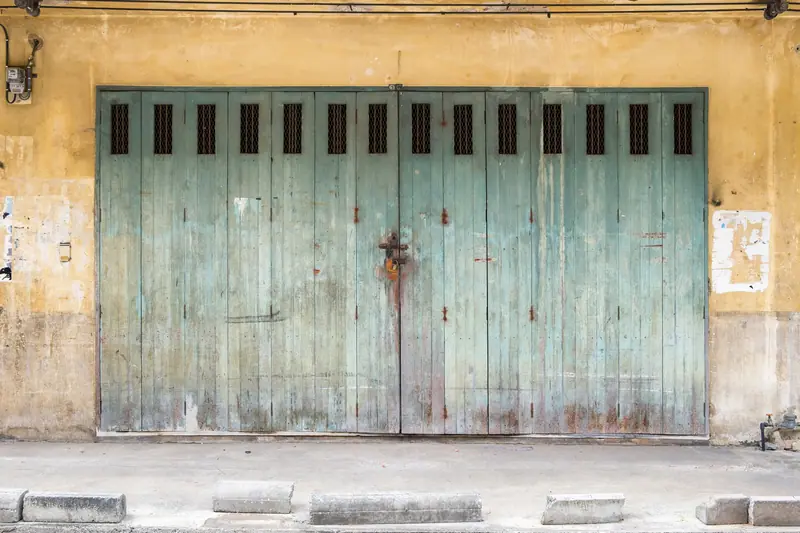
Old side-hinged and one-piece doors leak air around every edge and are heavy to operate. A sectional door in a warm woodgrain finish keeps the character, adds insulation, and runs on an opener.
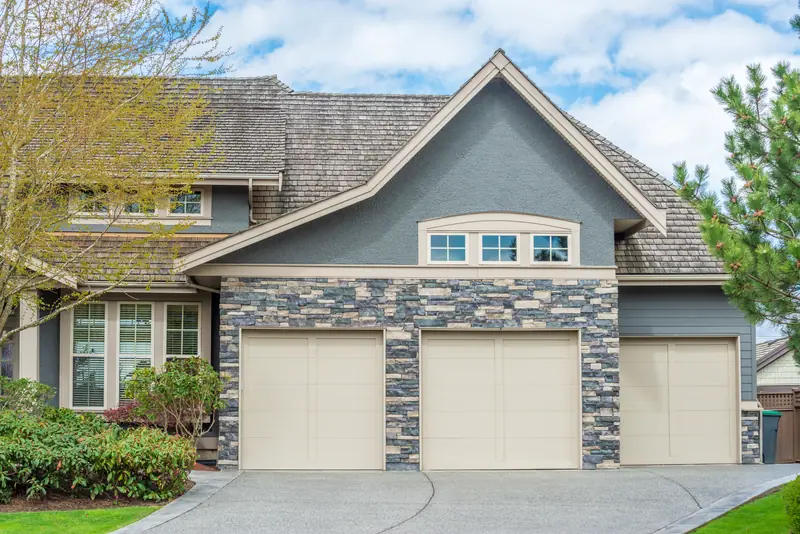
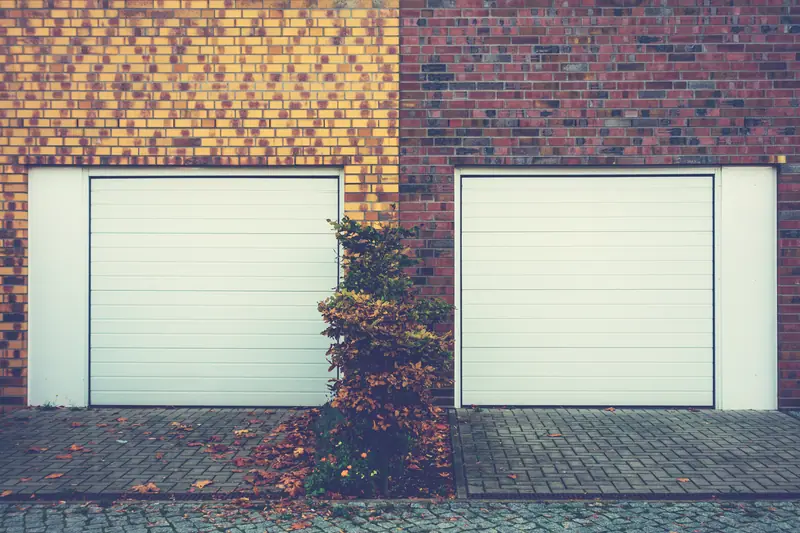
When several doors face the road, matching them to each other and to the trim color does more for curb appeal than almost any other single exterior project.
Featured garage door designs
A sample of the styles we install most often around Lake Country. Hover or tap for a note on each.
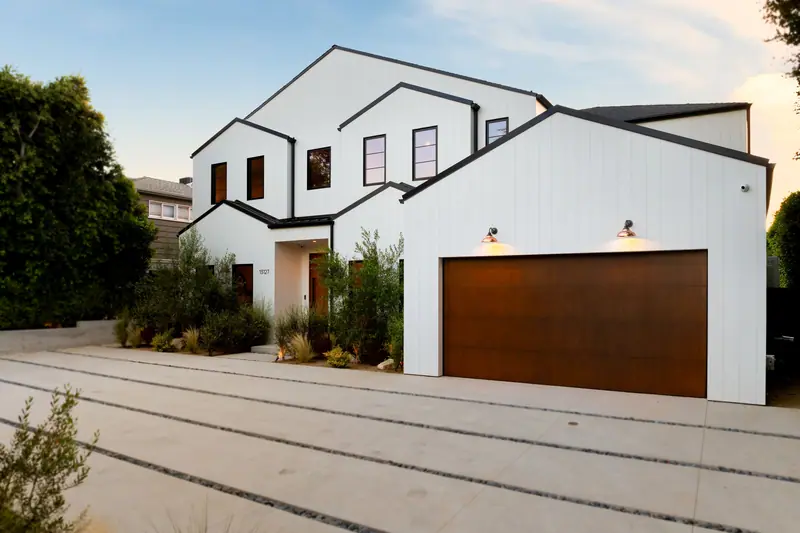 Horizontal plankWarm wood tones against white siding. Suits modern farmhouse builds.
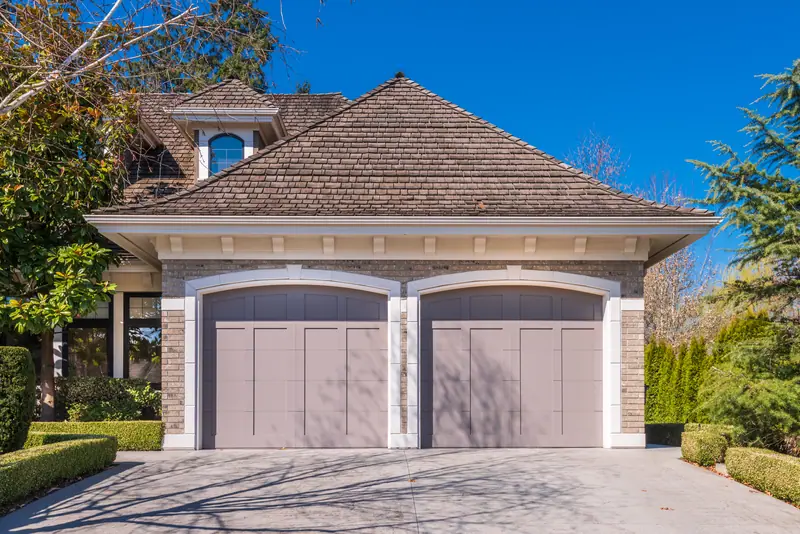 Arched carriageOverlay trim and arched tops for stone and shingle homes.
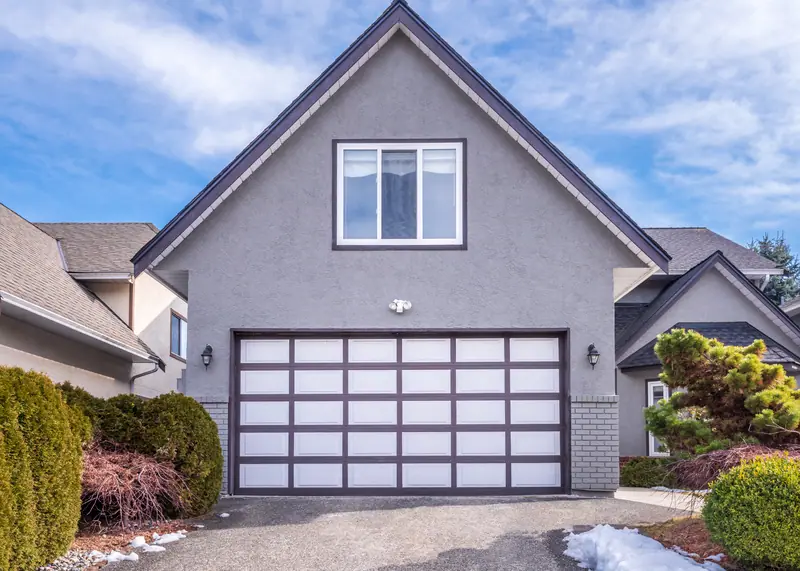 Full-view glassaluminum frames and frosted or clear panels for daylight.
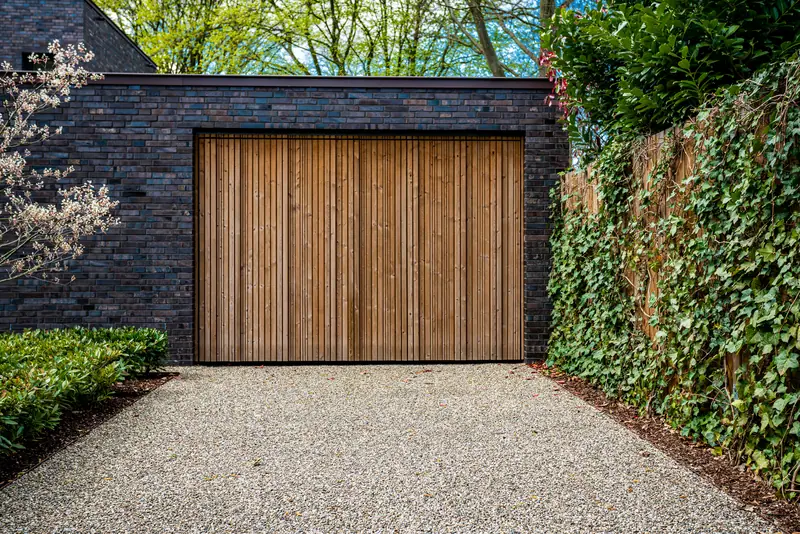 Vertical cedarTight vertical boards that read as part of the wall.
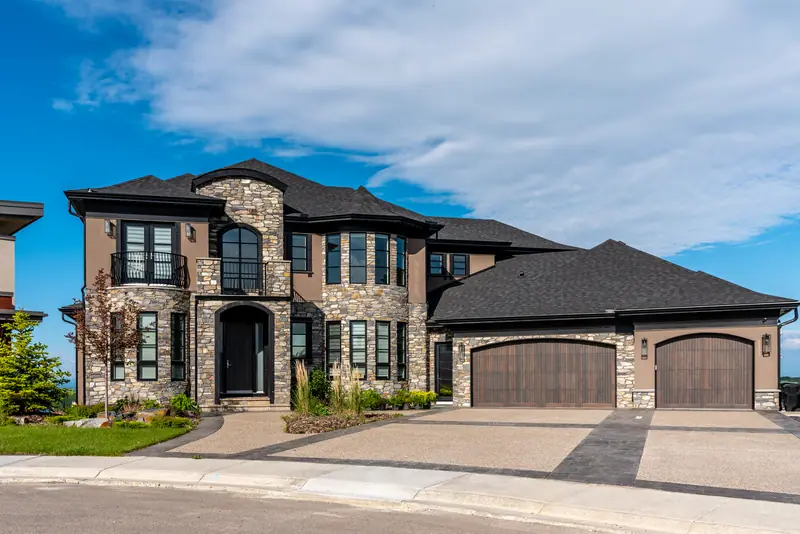 Dark carriageDeep stain on a stone facade with matching hardware.
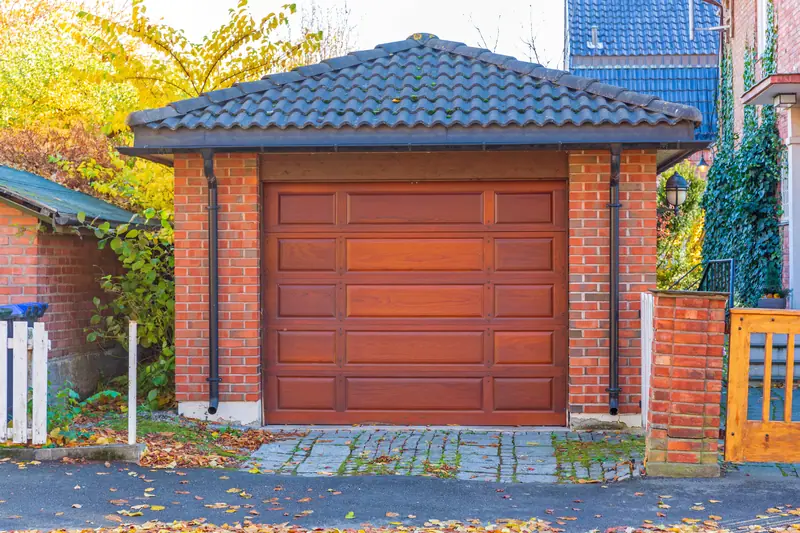 Cedar-tone raised panelA classic profile that works on brick garages of any age.
Service areas
We are based around Nashotah and work throughout the neighboring parts of Waukesha County. That takes in the lake properties on Upper and Lower Nashotah, Nagawicka, Pine and Okauchee, the older village streets, the newer subdivisions off the county roads, and the farms and shops in between.
Lake homes bring their own questions: detached garages and boathouses with odd-sized openings, extra moisture, and doors that sit unused for stretches of the year. Homes back in the trees deal with shade, damp and falling branches. We have suggestions for each, and we are happy to talk through them before you commit to anything.
Not sure whether you are in range? Call and ask. We do not keep offices in these communities; we travel to you.
Service area details

Frequently asked questions
That is almost always a broken spring. The bang is the spring unwinding when the steel snaps. The door is now at its full weight, so do not try to lift it with the opener and be very careful lifting it by hand. Leave it closed if you can and call us for a spring replacement.
Cold stiffens springs and thickens grease, so the door needs more force to move. An opener set with little margin reads that extra effort as an obstruction and reverses. Fresh low-temperature lubricant, a balance check and a small force adjustment usually cure it. A bottom seal frozen to the floor causes similar symptoms.
On a two-spring door, yes in nearly every case. Both springs were installed together and have done the same number of cycles, so the second is close behind the first. Replacing the pair keeps the door balanced and saves a second visit a few months later.
For an attached garage, we think so. An insulated door keeps the garage noticeably warmer in winter, which protects the rooms beside and above it, and the sandwich construction makes the door stiffer and quieter. For an unheated detached garage used only for storage, a non-insulated door can be a reasonable saving.
A standard residential door is normally removed and replaced in a single visit of a few hours. Custom doors, structural repairs to the opening, or new opener wiring add time. Lead time for the door itself depends on the model, and we will tell you what to expect when you order.
Yes. Most of our repair work is on doors and openers that were installed by someone else, sometimes decades ago. We service the common residential and commercial door types and opener drive systems, and we will tell you plainly if parts for an older unit are no longer available.
Always. You will know what the work involves and what it costs before we pick up a tool. For new doors we measure the opening first so the number you get is for your garage, not an average one.
Estimates
Send a few details and we will follow up, or call and talk it through. The more you can tell us about the door, the opener and the symptoms, the more useful our first answer will be.