Most of the time, an electric garage door opener is a small convenience. When the power is out, its absence is a large inconvenience. The door that normally glides up at the touch of a button turns into a couple of hundred pounds of steel that has to be released and lifted by hand.
We install battery backup systems for garage door openers in and around Nashotah. It is one of the upgrades people rarely think about until the morning they need it.
What a battery backup does
A backup battery sits in or beside the opener and stays charged from the mains. When the power fails, the opener switches over automatically. You press the remote, the keypad or the wall button exactly as usual, and the door operates.
On battery power you can typically expect:
- A number of full open-and-close cycles, commonly in the region of twenty or so over a day or two, depending on the model, the door and the temperature.
- Slightly slower door travel than normal, to conserve power.
- An audible beep or an indicator light to tell you the opener is running on its battery.
- Reduced lighting, as the opener's work light may stay off or dim.
- Working safety sensors. The photo-eyes and reversal remain active.
When the power returns, the battery recharges by itself.
Who benefits most
Homes where the garage is the main entrance
If you rarely carry a house key, an outage can lock you out as well as in.
Anyone who cannot lift a heavy door
Older residents, people with injuries or limited strength, and anyone who simply should not be heaving a garage door.
Households with medical or work commitments
When getting the car out is not optional.
Homes with heavy doors
Insulated double doors, wood and carriage house doors are harder to operate by hand even when balanced.
Garages with no other door
A detached garage with only the overhead door has no other way in if the opener is dead.
Rural and wooded properties
Places at the end of the line tend to lose power more often and get it back later.
Seasonal and lake homes
Arriving in a storm to a garage you cannot open is a poor start to a weekend.
Three ways to get backup power
| Option | What it is | Suits |
|---|---|---|
| Opener with integrated battery | A new opener designed with a battery compartment and automatic switchover | Anyone replacing an opener, or installing a first one |
| Battery added to a backup-ready opener | Some existing openers have the connector and space, and only need the battery fitted | Recent openers sold as battery capable |
| External standby unit | A separate battery and inverter between the outlet and the opener | Existing openers that are in good condition and not battery ready, where compatible |
Which applies depends on the opener you have. If it is old, noisy or lacking modern safety features, replacing it with a backup-equipped unit deals with everything at once. See opener replacement.
How we install it
- 01
Identify the opener
We check the make, model and age to see whether it accepts a battery, or whether another route is needed.
- 02
Check the door first
A battery has limited energy. A balanced, free-running door uses very little of it. A heavy or binding door will drain the battery in a few cycles. We test the balance and correct it.
- 03
Fit the battery or new opener
Either the battery is installed and connected, or a new backup-equipped opener is installed in full.
- 04
Allow it to charge
A new battery needs time on mains power to reach full charge. We explain how long.
- 05
Test on battery
We disconnect the mains and run the door through complete cycles on battery power.
- 06
Verify the safety systems
The photo-eyes and contact reversal are tested while on battery, not just on mains.
- 07
Show you the indicators
You will know what the lights and beeps mean, how to tell when the battery needs replacing, and how to operate the manual release as a last resort.
Before & after
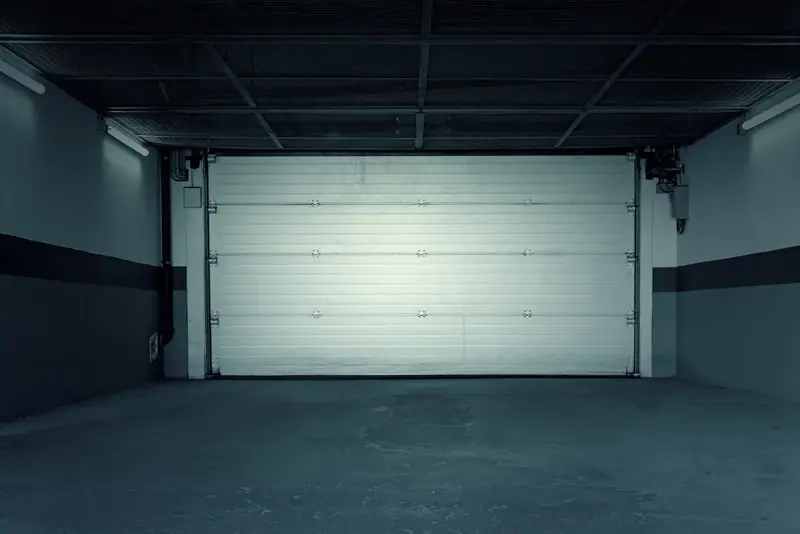
A dark garage during an outage compared with one that keeps working
Project notes
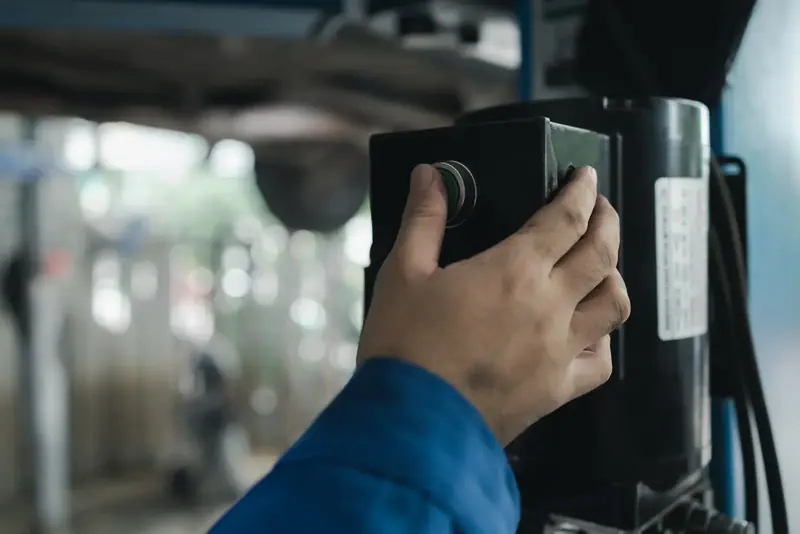
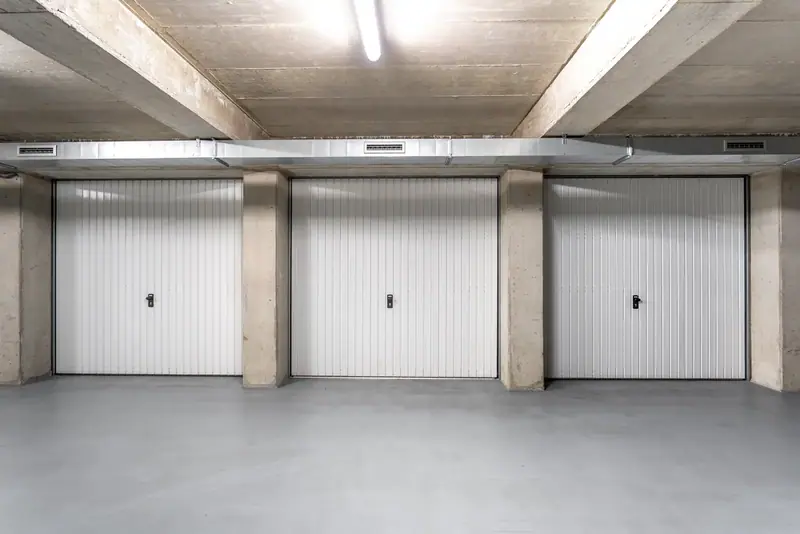
The first image shows a garage as it is in a power cut: dark, door closed, opener dead. Unless someone pulls the release cord and lifts the door by hand, and remembers how to secure it afterward, the vehicles inside are staying where they are.
The comparison illustrates the same kind of space with everything functioning. A battery backup does not change how the garage looks. It changes what happens when the grid fails: the opener switches to its battery automatically, and the door, the remotes and the safety sensors all continue to operate.
The benefit is felt on a small number of days each year, and on those days it matters a great deal. You can leave for work, get to an appointment or get home and inside, without wrestling a heavy door in the dark and cold.
Illustrative example. These are licensed reference photographs chosen to show the kind of change this service makes. They are not photos of a specific Nashotah Garage Door customer's property.
Looking after the battery
Backup batteries are sealed units that need little attention, but they do not last forever.
- Life: typically one to three years, sometimes a little longer. Heat, deep cold and frequent outages shorten it.
- Warning signs: most openers beep at intervals or show a colored light when the battery is failing or no longer holding charge.
- Testing: twice a year, unplug the opener and run the door. If it struggles or will not complete a cycle, the battery is due.
- Replacement: a quick job. We can do it during a tune-up, and we take the old battery for proper recycling.
Keep in mind that an opener beeping every thirty seconds is not broken. It is telling you about the battery.
Battery backup and the Wisconsin climate
This is a service with obvious local relevance.
Ice storms and heavy, wet snow. These bring down branches and lines, often for hours and sometimes for days. They also tend to arrive at exactly the times you most need to move a vehicle.
Summer thunderstorms. Wind and lightning cause shorter outages through the warm months, and surges that can damage an opener's electronics. A surge protector at the outlet is a worthwhile addition alongside the battery.
Wooded lots. Much of the area around Nashotah is heavily treed. Trees and overhead lines are not a happy combination in wind or ice.
Cold and capacity. Batteries deliver less energy when cold. In an unheated garage at ten below, expect fewer cycles from a charge than the figure quoted for room temperature. This is another reason to make sure the door is well balanced and well lubricated going into winter, so each cycle costs the battery as little as possible.
Frozen thresholds. A battery will not help if the door is frozen to the slab. Keep the threshold clear, and if the door will not move, release it and free the seal before trying again.
Knowing the manual release
A battery backup greatly reduces how often you will need it, but every household should know how to operate the door by hand. We go through this with you during the visit.
- Only release the door when it is fully closed if at all possible. Releasing a raised door with a weak or broken spring can let it fall.
- Pull the red cord straight down, then back toward the motor, to disengage the trolley.
- Lift the door from the handle or the bottom edge, using both hands and your legs. A balanced door should rise with modest effort.
- If it is very heavy, stop. A spring is weak or broken. Leave it down.
- Once open, check that it stays up. Do not walk or drive under a door that drifts down.
- To secure a closed door without power, engage the manual lock if one is fitted, or use a clamp on the track above a roller.
- To re-engage, pull the cord toward the door until the trolley latches, or run the opener once power returns.
If you have an attached garage with no separate entry door from outside, there should also be an external emergency release, a small keyed lock in the door that pulls the release cable. We can fit one.
What about a generator or whole-home battery?
If your house has a standby generator or a home battery system that picks up the garage circuit, the opener will run from that and a separate opener battery is less important. It can still be worthwhile as a second layer, since generators need fuel and maintenance and do not always start. If you have a portable generator, bear in mind you may need the garage door open to get it out.
Why have it professionally installed
Fitting a battery to a backup-ready opener is simple. The value of a professional visit lies in the surrounding checks: confirming compatibility so you do not buy the wrong battery, balancing the door so the stored energy goes as far as possible, and testing the complete system, including safety reversal, with the mains disconnected. It is also a good moment to make sure everyone in the house knows how the manual release works.
Frequently asked questions
It varies by model and conditions. Many systems provide around twenty cycles within the first day or so. A balanced door and milder temperatures give the best results.
Only if the opener was designed to accept one, or is compatible with an external standby unit. We check the model and advise.
Usually one to three years. The opener will signal when it is failing, typically with a beep or a warning light.
Yes. The photo-eyes and reversal system remain active during battery operation.
On a backup-equipped opener, periodic beeping generally means it is running on battery, or that the battery needs replacing.
That depends on what being unable to get the car out would cost you. For households that rely on the garage as their main entrance, or where lifting the door by hand is difficult, most people find it well worth having.