Garage door cables do not get much attention. They are thin, gray, tucked beside the tracks, and for years they just work. Then one morning the door goes up crooked, or a loop of loose cable is hanging beside the track, and suddenly they are the most important part of the garage.
We repair and replace garage door cables for homes in Nashotah and around the lakes. Here is what they do, how they fail and how we fix them.
What the cables do
Springs provide the lifting force. Cables deliver it to the door.
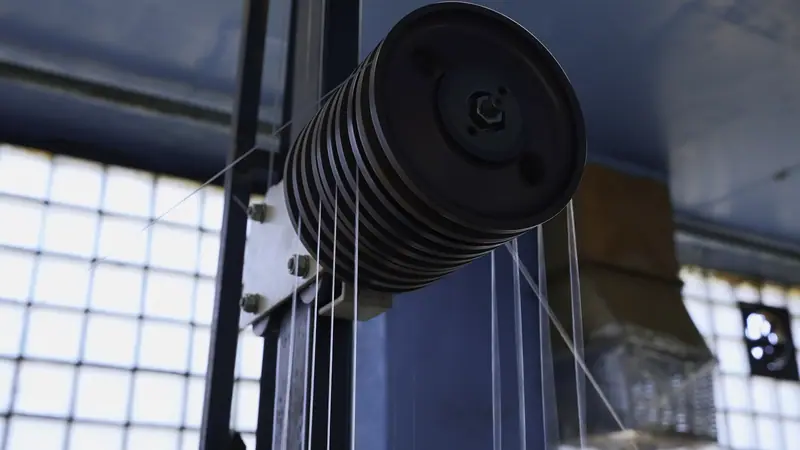
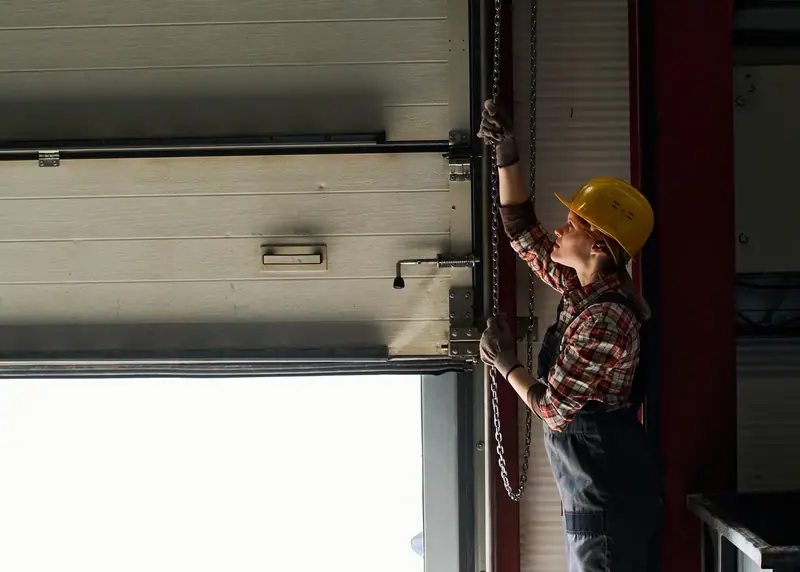
On a torsion system, each cable is anchored to a bracket at the bottom corner of the door, runs up the side between the door and the track, and winds onto a grooved drum at the end of the torsion shaft. As the springs turn the shaft, the drums reel in the cables and the door rises.
On an extension system, each cable runs from the bottom bracket up over a fixed pulley, back through a second pulley on the end of the spring, and to an anchor on the track hanger.
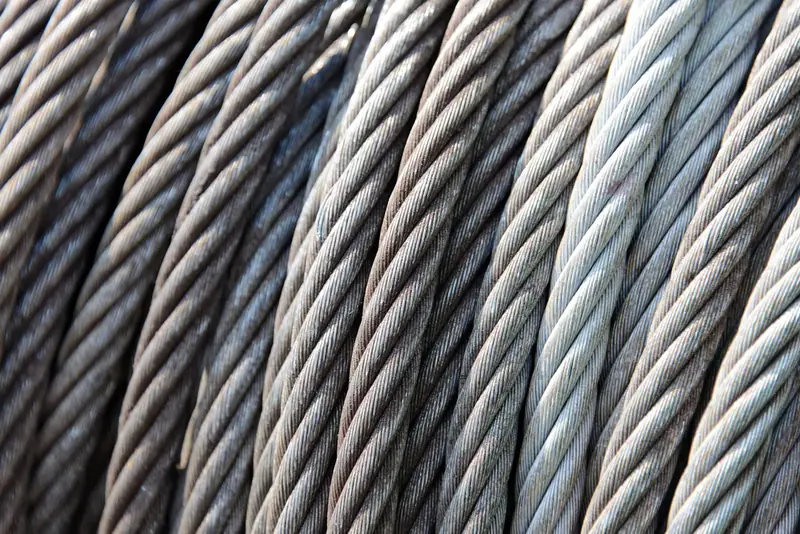
Either way, the two cables share the full weight of the door, all day, whether it is moving or standing still. They are made of many fine galvanized steel wires twisted into strands, which gives them strength and the flexibility to wrap around a drum.
Ways a cable fails
Fraying
Individual wires break and stick out like whiskers. Usually starts at the bottom, near the bracket, or where the cable bends onto the drum.
Rust
Water and salt collect at the bottom of the door. Corrosion weakens the strands from the inside, often before it shows.
Slipping off the drum
If the door hits something, a spring breaks, or the door is lifted unevenly, the cable goes slack and jumps its groove. It may wrap around the shaft.
Snapping
A badly frayed or rusted cable finally parts. One side of the door drops and the door jams at an angle.
Stretching and uneven length
Over time, or after a poor repair, the two cables end up at different tension and the door hangs out of level.
Kinking
A cable that has been off the drum is often kinked, and a kinked cable is permanently weakened.
Warning signs to look for
You can check your own cables from a safe distance, with the door closed and without touching anything.
- Loose wire ends or a fuzzy look anywhere along the cable.
- Rust, especially within a foot of the bottom bracket.
- Cable that is slack, drooping, or not seated in the drum grooves.
- A door that sits lower on one side, or shows a wedge of daylight at the floor.
- Jerky, shuddering movement on the way up.
- A door that will not open more than a few inches.
If you see any of these, stop using the door. A cable under load that is about to fail gives very little additional notice.
Why cables wear out
A cable rarely fails for no reason. When we replace one, we look for the cause, because fitting a new cable into the same conditions just starts the clock again.
Moisture at the floor. The lowest foot of cable sits in the wettest, saltiest part of the garage. Snowmelt drips off the car and runs toward the door. This is the leading cause of cable failure in our area.
Worn or damaged drums. A chipped groove or a rough edge on a drum saws at the cable on every cycle. See drum replacement.
Seized pulleys. On extension spring doors, a pulley that will not turn makes the cable drag across it.
Misalignment. If the track is too close to the door or a bracket is bent, the cable rubs on something it should clear.
An unbalanced door. Weak springs let the cables go slack at the top of travel, and slack cables jump their grooves.
Age. Even in perfect conditions, steel flexed over a drum many thousands of times eventually fatigues.
How we repair it
- 01
Make the door safe
The door is clamped in place and the opener disconnected. If the door is jammed crooked, we support it before releasing anything.
- 02
Release spring tension
Cables cannot be changed with the springs loaded. Torsion springs are unwound with winding bars. Extension springs are relaxed with the door open.
- 03
Remove both cables
We replace cables as a pair so they are the same length and age.
- 04
Inspect what they touch
Drums, pulleys, bearings, bottom brackets and the edge of the track are checked for wear, cracks and rough spots.
- 05
Fit new cables
Cables of the correct diameter and length for the door height and drum type are attached at the bottom brackets and seated in the drum grooves or routed through the pulleys.
- 06
Set even tension
Both sides are adjusted so the cables are equally taut and the door sits level.
- 07
Rewind and balance
The springs are wound back to specification and the door is tested by hand.
- 08
Test with the opener
The opener is reconnected and run through several cycles while we watch the cables track onto the drums.
Before & after
A rusted, frayed cable compared with new galvanized cable
Project notes
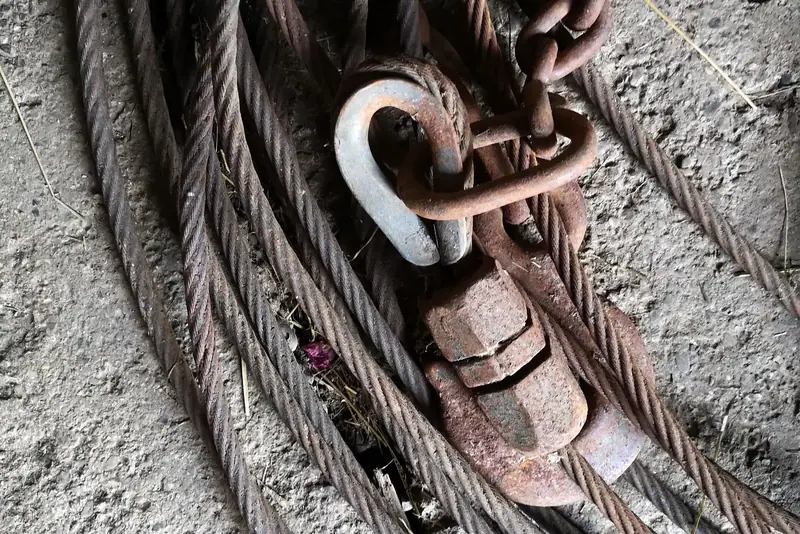
The first image shows cable in the condition we often find at the bottom corners of older doors. Rust has worked into the strands, several have broken and curled outward, and the fittings are corroded. Each broken strand moves its share of the load onto the rest, so a cable like this fails faster and faster.
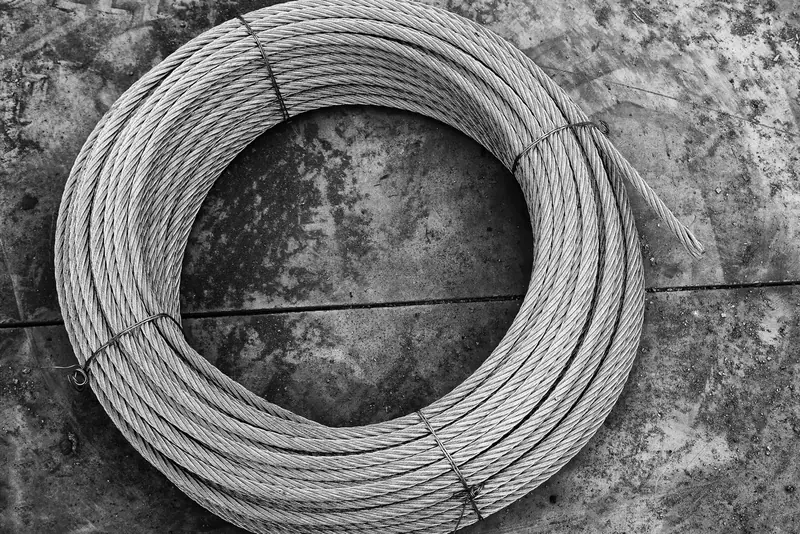
The second image illustrates the replacement material: new galvanized cable of the correct diameter and length for the door, with factory-swaged ends. In a real repair both cables are replaced together, routed cleanly onto the drums or through the pulleys, and tensioned so they share the load equally.
With new cables the door hangs level, lifts without jerking, and the risk of it dropping on one side is gone. Checking the drums and bottom brackets at the same time removes the thing that wore the old cables out.
Illustrative example. These are licensed reference photographs chosen to show the kind of change this service makes. They are not photos of a specific Nashotah Garage Door customer's property.
Why we do not just put the cable back on
When a cable has jumped off its drum, it is tempting to think the fix is to hook it back. Sometimes people ask us to do exactly that.
There are two problems. First, something caused it to come off, and unless that is found, it will come off again. Second, a cable that has been off the drum has usually been kinked, crushed against the shaft or stretched. It may look acceptable and still be a fraction of its original strength. Our practice is to replace it, and its partner, and to correct whatever let it go slack.
The bottom bracket: a warning
Each cable is fixed to a bracket at the lower corner of the door. That bracket is bolted to the door and looks like any other piece of hardware. It is not. It carries the full pull of the spring through the cable.
If that bracket is unbolted while the springs are wound, it is released with enormous force. Manufacturers now fit tamper-resistant fasteners and warning tags to these brackets for that reason. Older doors may have neither. Please leave them alone.
Cables and Wisconsin winters
Salt. From November to April, every car brings salty slush into the garage. It collects in the corners by the door, right where the cables are anchored. Rinsing the floor near the door a few times over winter, and washing down the bottom brackets in spring, extends cable life noticeably.
Frozen doors. If the bottom seal is frozen to the slab and the opener is triggered, the drums turn while the door stays put. The cables go slack, jump their grooves and tangle. If your door does not move on a freezing morning, do not keep pressing the button. Free the seal first.
Lake properties. Damp air accelerates corrosion. For garages near the water we suggest stainless or heavily galvanized cable, and a look at the bottom brackets every year.
Stiff doors. Thick grease and tight seals make the door harder to start moving in the cold, which puts shock loads on the cables. A fall tune-up with low-temperature lubricant helps.
Why this needs a professional
Cable work always involves spring tension. To change a cable safely, the springs have to be unloaded and then reloaded, which is the most hazardous operation on a garage door. A door hanging from one cable is also unstable and can shift or drop without warning while you are working beside it.
There is skill in the detail too. Cable length must suit the door height and drum. The cable must sit in the correct groove and leave the drum at the right point. Both sides must be equal. Small errors show up as a door that binds, lifts unevenly or throws its cable again a month later.
Frequently asked questions
No. A frayed cable can snap at any time, and when it does the door drops on one side and may jam, come off its tracks or fall. Leave the door closed and call us.
The usual causes are a broken spring, the door striking an obstruction, the opener running while the door was frozen down, or the door being lifted unevenly by hand. A worn drum or unbalanced springs can also be responsible.
We recommend it. They have aged together, and a matched pair keeps the door level. The second cable is rarely far behind the first.
Often ten years or more in a dry garage. Moisture and salt at the bottom brackets can shorten that considerably.
Cables themselves are inexpensive. The cost is mainly the labor of safely releasing and resetting the springs. We will give you a price before starting.
No. Lubricant on cables attracts grit. Keep them clean and dry, and rinse away road salt near the bottom of the door.