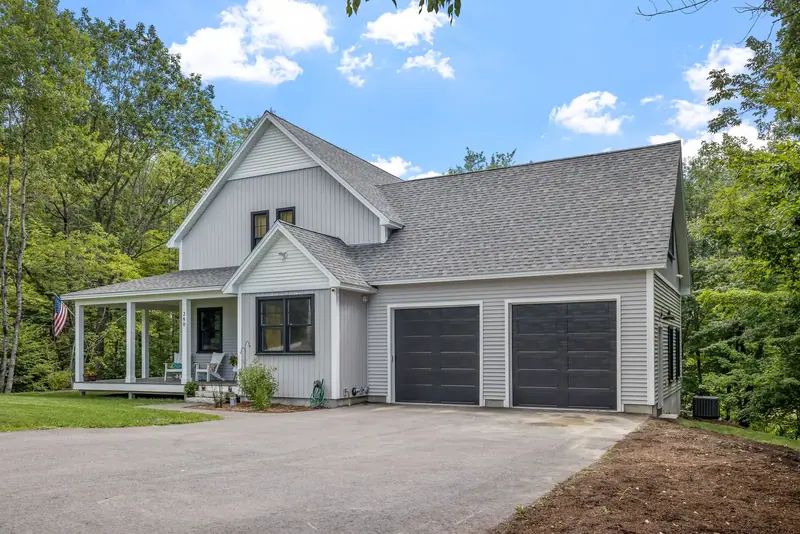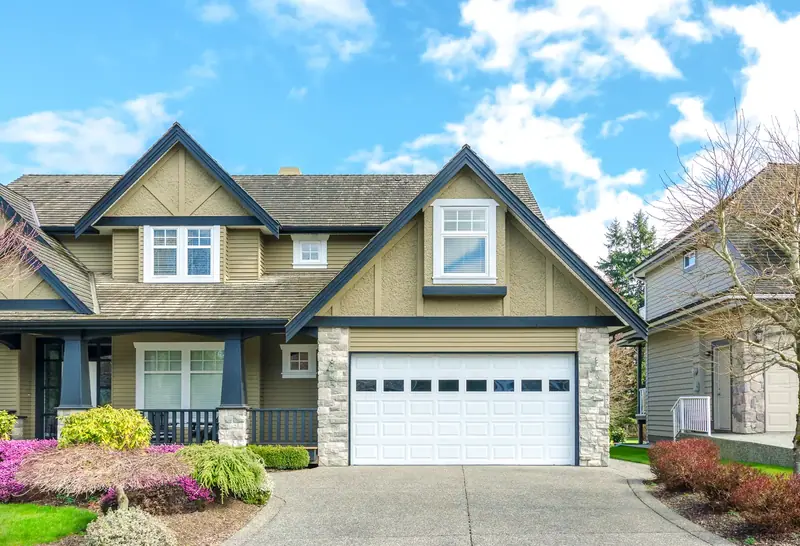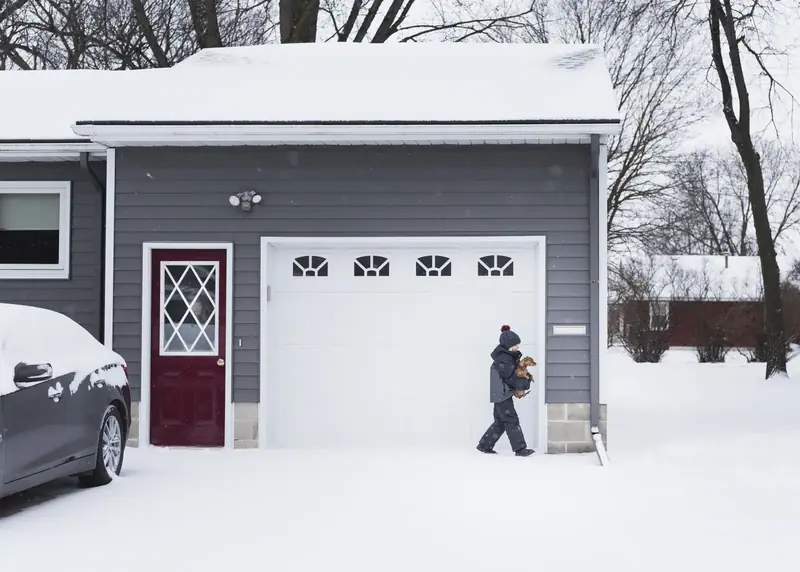
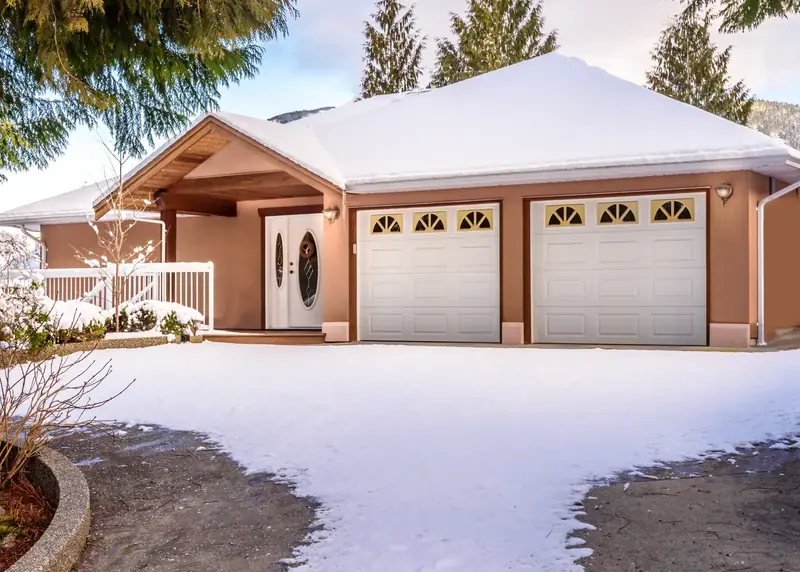
If your garage is attached to the house, its door is doing more to your heating bill and your comfort than you might expect. A double garage door is over a hundred square feet. When it is a single sheet of steel, it is a hundred square feet of radiator pointed the wrong way.
We install insulated garage doors for homes in and around Nashotah. Here is what insulation really does, how the options differ, and how to decide what your garage needs.
How an insulated door is built
Garage doors come in three constructions, and the terms are worth knowing.
| Construction | What it is | Typical insulating value | Best suited to |
|---|---|---|---|
| Single layer | One stamped steel skin, no insulation | Almost none | Detached, unheated storage |
| Double layer | Steel skin with foam board and a thin vinyl or steel backer | Modest, roughly R-6 to R-9 | Budget upgrades, mild exposure |
| Triple layer | Foam core bonded between two steel skins | Higher, roughly R-9 to R-18 or more | Attached garages, heated garages, rooms above |
Figures vary by manufacturer and thickness, so treat them as a guide. We will show you the published rating for any door we quote.
Polystyrene and polyurethane
Two foams are used. Polystyrene is a rigid board cut to fit inside each section. It is economical and effective. Polyurethane is injected as a liquid and expands to fill the entire cavity, bonding to both skins. Inch for inch it insulates noticeably better, and because it glues the skins together it makes the section much stiffer and quieter.
For the same door thickness, a polyurethane door will have roughly double the R-value of a polystyrene one. If the garage is attached and the budget allows, it is the one we suggest.
The parts that matter as much as the foam
An R-value describes the middle of a panel. Heat also escapes through the edges, and that is where doors differ.
- Thermal breaks separate the inner and outer steel skins so cold cannot conduct straight through the metal at the section edges.
- Section joint seals stop air from passing between the panels. Tongue-and-groove joints with a gasket are far tighter than plain butt joints.
- Perimeter weatherstripping on the jambs and header, and a bottom seal that suits the floor, close the gaps around the door.
- Insulated glass in any windows prevents them from becoming the weak spot.
A well-sealed door with moderate insulation will outperform a high R-value door with gaps around it. We treat sealing as part of the installation, not an extra.
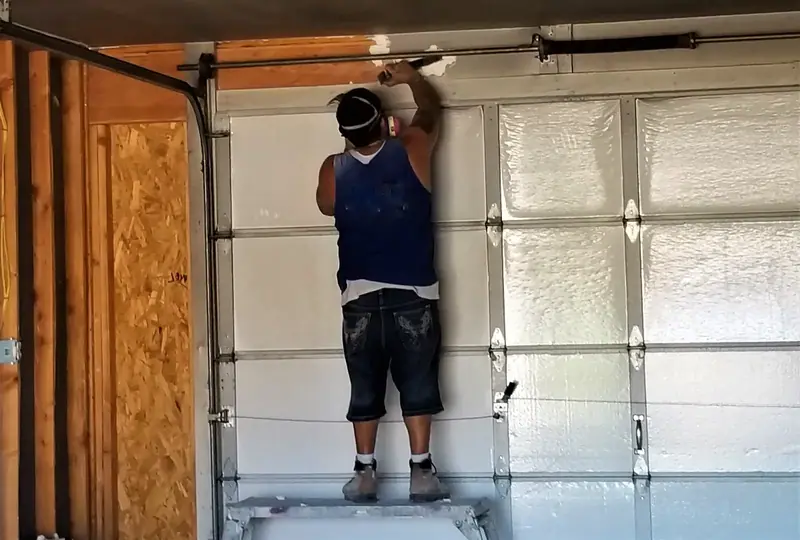
Who benefits most
Attached garages
The wall and door between the garage and the house are a major path for heat loss. A warmer garage means warmer adjoining rooms and fewer drafts through the entry door.
Rooms above the garage
Bedrooms and bonus rooms over a garage are notoriously cold. Raising the garage temperature is one of the most effective fixes.
Heated garages and workshops
If you run a heater, an uninsulated door wastes much of the heat you are paying for.
Garages with plumbing
Laundry hookups, utility sinks and water lines in garage walls are at real risk in a deep freeze.
Noise-sensitive homes
Foam-filled doors are dramatically quieter in operation and block more street noise.
Hobby and storage spaces
Paint, electronics, batteries and vehicles all do better when they are not cycling through extreme temperatures.
If your garage is detached, unheated and used only to park a mower and store garden tools, a non-insulated door may be perfectly adequate. We will say so.
What to expect in practice
An unheated attached garage with an insulated, well-sealed door typically stays considerably warmer than the outdoors on a cold day, because it borrows heat from the house and the ground and holds onto it. The exact difference depends on your walls, ceiling and how often the door opens, so we do not promise a number. What homeowners usually tell us is that the garage stops feeling bitter, the car is less frosty, and the room above is more comfortable.
Insulated doors also last longer mechanically. The sandwich construction resists dents and does not flex and fatigue at the hinge points the way thin steel does.
Before & after
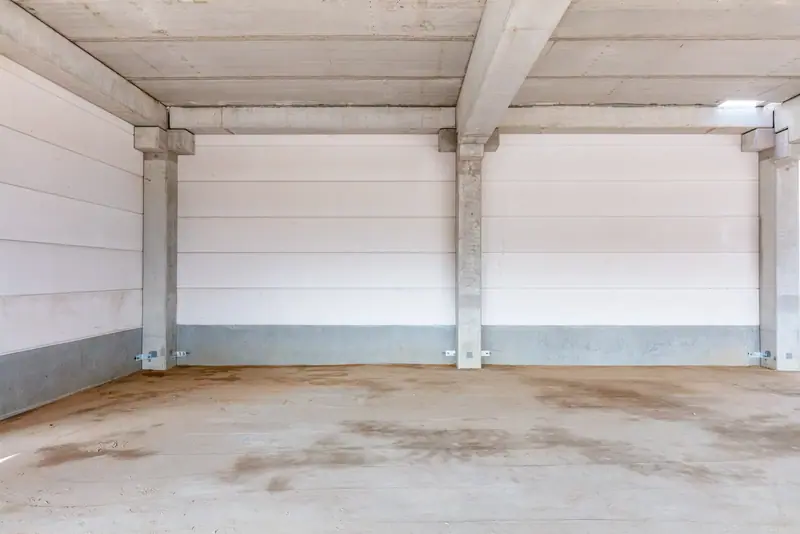
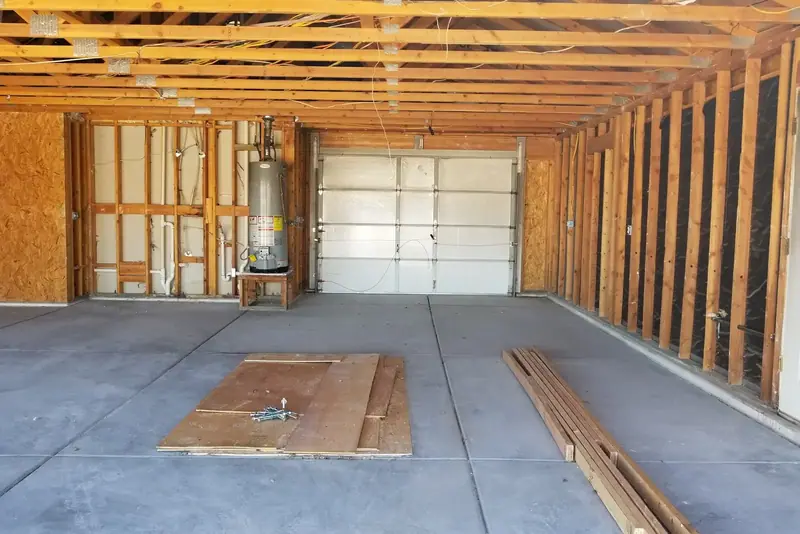
An unfinished, uninsulated garage compared with an insulated one
Project notes
The first image is the garage many Wisconsin homes still have: open studs, a single-skin steel door and daylight around the edges. On a cold night the inside face of that door is within a few degrees of the outdoor temperature, and so is everything stored near it.
The comparison shows the same kind of space after an insulated door installation. Three-layer foam-core sections replace the thin steel, the perimeter is fitted with new weatherstripping, and a fresh bottom seal closes against the slab. In this example the walls have been finished as well, which is a common next step once the door stops leaking heat.
The practical gains are a garage that stays well above the outside temperature, a car that starts more easily, pipes and stored goods that are safer from freezing, and a much quieter door.
Illustrative example. These are licensed reference photographs chosen to show the kind of change this service makes. They are not photos of a specific Nashotah Garage Door customer's property.
Installation: what is different about an insulated door
The process follows a standard installation with a few important differences.
- Weight. An insulated door weighs more than the single-skin door it often replaces. New springs are selected for the new weight. Reusing old springs would leave the door heavy and overwork the opener.
- Track fit. Thicker sections sit differently in the opening. The track is set so the door closes snugly against the weatherstripping without dragging on it.
- Sealing. New stop molding with a flexible flap is fitted to both jambs and the header. The bottom seal profile is chosen to match the slab, with a larger bulb where the floor is uneven.
- Opener check. The existing opener is tested against the balanced new door. Most are fine. Older or undersized units may need replacing.
- Final test. We check for daylight around the closed door from inside with the lights off, then test balance and safety reversal.
Most insulated door installations are completed in a single visit.
Wisconsin specifics we plan for
Frozen seals. The better a door seals, the more likely meltwater is to freeze the bottom seal to the floor. A seal made from a material that stays flexible in the cold, plus a slab that drains away from the door, reduces this. A light wipe of silicone on the seal in the fall helps as well.
Condensation. When a snowy, wet car is parked in a warmer garage, moisture ends up on the coldest surface it can find. On an uninsulated door that is the whole door, and it runs down and rusts the bottom section. An insulated door stays above the dew point far more of the time.
Frost heave. Slabs and aprons move with the frost. We check floor level during measuring and choose a seal that can take up seasonal movement.
Wind off the lakes. Exposed properties see strong gusts. Triple-layer doors are inherently stiff, and we add reinforcement struts on wider doors where the exposure calls for it.
Sun. Dark colors on a south or west face get very hot in summer. Insulated construction handles this well, but it is worth knowing if you are choosing between two shades.
Should you insulate the old door instead?
Retrofit kits exist, and people ask about them. They add foam board to the back of an existing single-skin door. They do help a little with radiant cold, and they are inexpensive.
The drawbacks are real, though. The kit adds weight that the springs were not sized for, so the door goes out of balance unless the springs are adjusted or replaced. The foam does nothing about leaky section joints or worn seals. And it does not add stiffness the way a bonded core does. For a detached workshop it can be a reasonable stopgap. For an attached garage, a purpose-built insulated door is the lasting answer. If you do fit a kit, have the door's balance checked afterward.
Why professional installation matters here
Insulated doors are heavy, and their springs carry more tension. Getting the balance exactly right is what allows a modest opener to move a substantial door for years. Getting the track position and seals right is what delivers the insulation you paid for. Both are judgment calls made on site, and both come from doing this regularly.
Frequently asked questions
For an attached, unheated garage, a triple-layer door in the middle of the range is a sound choice. If the garage is heated or has living space above it, go higher. We will recommend a level based on how you use the space.
It reduces heat loss from the house into the garage and from the garage to outdoors, so it can help, especially with rooms adjoining or above the garage. The size of the saving depends on the rest of the building.
They weigh more, but you will not feel it. The springs are sized to the door, so a balanced insulated door lifts as easily as any other.
For attached and heated garages, generally yes. You get more insulation in the same thickness and a stiffer, quieter door.
Yes. Nearly every style is available in an insulated construction, including carriage house, raised-panel, flush and wood-look designs.
If they are not already insulated, it makes the door's contribution go further. The door is usually the best first step because it is the largest uninsulated surface.