Think about how you would treat anything else that weighed a couple of hundred pounds, moved several times a day and sat half outdoors through a Wisconsin winter. You would probably look at it now and then. Garage doors rarely get that courtesy.
Our residential maintenance service is a planned, unhurried inspection and service of the entire door system. It is aimed at homeowners in Nashotah and nearby who would rather spend a little on prevention than a lot on a breakdown.
What wears, and how fast
A garage door has roughly three hundred moving contact points once you count every roller, hinge knuckle, bearing and pulley. They wear at different rates.
Springs
Lose tension gradually with every cycle. The door gets heavier a pound or two at a time until the opener notices.
Rollers
Bearings dry out and pit. Nylon tires crack. Steel rollers flat-spot and start to grind in the track.
Hinges
Knuckles elongate and the fasteners back out of the steel, especially on the end hinges that carry the rollers.
Cables
Rust and fray near the bottom bracket, where water collects. A few broken strands today is a snapped cable later.
Seals
Vinyl and rubber harden, flatten and tear, letting in water, cold and mice.
Opener
Chains and belts stretch, the trolley wears, and force settings drift as the door changes underneath.
None of that is a defect. It is what moving parts do. Maintenance is the business of keeping each one ahead of failure.
What a maintenance visit covers
We work through the door in the same order each time so nothing is missed.
- 01
Visual inspection
Sections, struts, hinges, brackets, track, fasteners, springs, cables and drums are examined for cracks, rust, looseness and wear.
- 02
Hardware tightening
Hinge screws, track bolts and bracket lags are snugged down. Vibration loosens them steadily, and loose hardware is behind much of the noise people complain about.
- 03
Lubrication
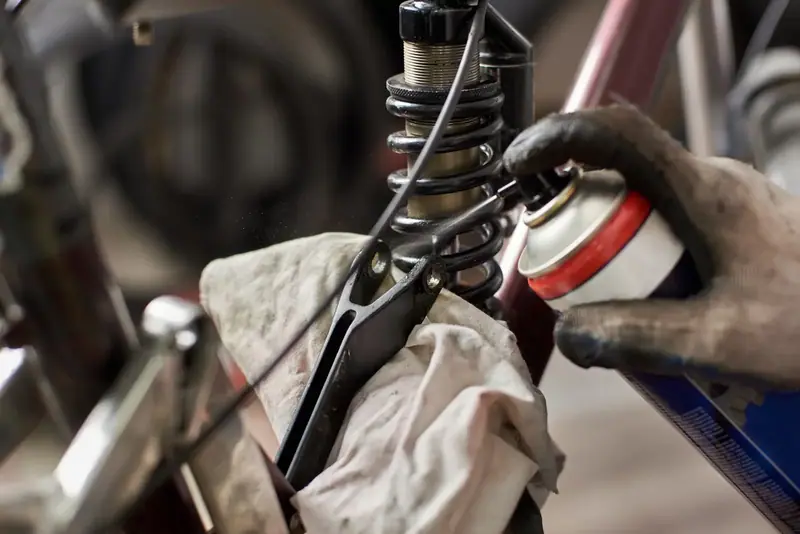
Spring coils, end and center bearings, hinge pivots and roller bearings receive a lubricant made for garage doors and rated for cold. Tracks are cleaned, not greased.
- 04
Balance test
With the opener disconnected, the door is lifted to several heights. It should stay where it is left. If it drifts, the springs are adjusted or flagged for replacement.
- 05
Cable and drum check
Cables are inspected along their length and at both anchor points. Drum set screws are checked for tightness.
- 06
Seal inspection
Bottom seal, retainer and perimeter weatherstripping are checked for contact and condition.
- 07
Opener service
Rail, trolley, chain or belt tension, mounting hardware, travel limits and force settings are checked and adjusted.
- 08
Safety tests
Photo-eye alignment and operation, the contact-reversal test, and the manual release are all tested.
- 09
Report
We tell you what was done, what is wearing, and what we would plan for next time. No surprises later.
A schedule that suits this climate
Twice a year works well around Nashotah, and the timing is driven by the weather.
Fall, before the freeze
This is the important one. Cold exposes every weakness: marginal springs break, thick grease stiffens, hardened seals stop sealing. A visit in September or October means the door goes into winter balanced, lubricated with a low-temperature product and sealed. It is also the right moment to replace a bottom seal, because the vinyl is far easier to fit while it is still mild.
Spring, after the thaw
Winter leaves salt and grit on everything near the floor. Frost may have lifted a corner of the slab or shifted the driveway apron, which shows up as a gap under the door or a door that suddenly binds. A spring check clears the salt, resets anything that moved and catches rust on the bottom brackets and lower section before it spreads.
If your household uses the door heavily, or the garage is detached and unheated near the water, keep to both visits. For a lightly used door on a sheltered, attached garage, once a year in the fall is reasonable.
Before & after
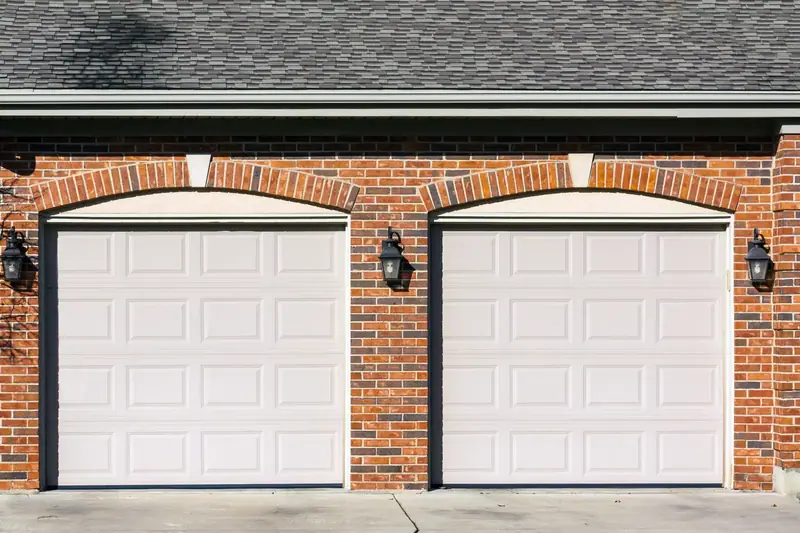
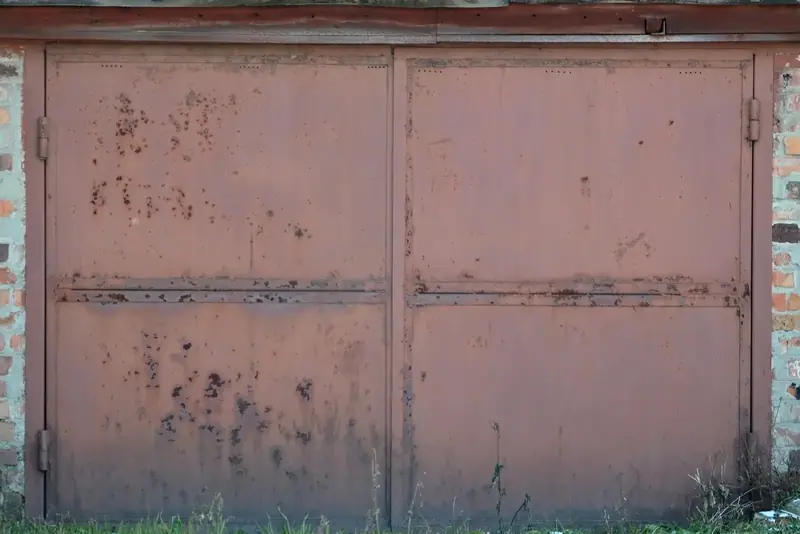
A neglected door compared with one kept on a maintenance routine
Project notes
The first image shows what years without attention look like. Corrosion has crept across the lower sections, the finish has chalked, and by this stage the hinges and rollers are usually dry, loose or both. A door like this still opens, but it is noisy, hard on its opener and close to an expensive failure.
The comparison shows doors that have simply been looked after: washed once or twice a year, hardware tightened, moving parts lubricated, seals replaced when they hardened and springs adjusted as they lost tension. No single step is difficult.
Maintained doors keep their finish, close against a soft seal instead of a cracked one, and reach the age where neglected doors are being scrapped with years still ahead of them.
Illustrative example. These are licensed reference photographs chosen to show the kind of change this service makes. They are not photos of a specific Nashotah Garage Door customer's property.
What you can do yourself between visits
Plenty of maintenance is safe for a homeowner, and we would rather you did it than not.
- Once a month, stand inside and watch a full open-and-close cycle. Look for jerky movement and listen for anything new.
- Every few months, wipe the photo-eye lenses with a soft cloth and confirm both indicator lights are steady.
- Twice a year, put a drop of garage door lubricant on each hinge pivot and roller bearing. Wipe off the excess.
- Twice a year, wash the outside of the door with mild soap and water, paying attention to the bottom section where salt collects.
- Each fall, check the bottom seal for cracks and gaps by turning off the garage light and looking for daylight.
- Monthly, test the reversal by closing the door on a length of lumber laid flat on the floor. The door should touch it and go back up.
A few cautions. Do not use ordinary household spray solvent as a lubricant; it cleans, then evaporates and leaves the part drier than before. Do not put grease in the tracks; it collects grit and makes the rollers slide instead of roll. And do not adjust, loosen or remove anything attached to a spring or cable, including the brackets at the bottom corners of the door.
What neglect looks like on a repair bill
The link between skipped maintenance and expensive repairs is direct, and it helps to see how one thing leads to another.
A dry roller bearing seizes. The roller now drags instead of turning, which wears a groove in the track and makes the door heavier to move. The opener works harder on every cycle and its drive gear wears early. Meanwhile the extra side load loosens the hinge that holds the roller, the hinge cracks, and the section begins to flex at that joint. What started as a few dollars of lubricant has become rollers, a hinge, a section repair and an opener gear kit.
Springs tell a similar story. As they weaken, the door gets heavier. Nobody notices because the opener still lifts it. But the opener was never meant to carry that load, and when the spring finally breaks, the opener often goes with it.
Maintenance interrupts those chains at the first link.
Why have a professional do it
You can cover the basics yourself, and the checklist above is a real help. A professional visit adds three things you cannot easily do at home.
First, the balance test and spring adjustment. Judging whether a door is correctly balanced takes practice, and correcting it means working on wound springs.
Second, a trained eye. A hairline crack in a hinge, a drum that has shifted on the shaft, the first broken strand in a cable. These are easy to miss and important to catch.
Third, opener settings. Travel limits and closing force should be set against a balanced door and then verified with a reversal test. Setting them by guesswork can leave a door that either reverses constantly or does not reverse when it should.
Frequently asked questions
Once a year at minimum. Twice a year, in fall and spring, is better for doors that are used several times a day or sit in a damp or exposed location.
Usually under an hour for a single door when no parts are needed. If we find something that needs replacing, we will explain it and price it before doing anything further.
A silicone or lithium-based spray made for garage doors. Avoid heavy grease, which stiffens in the cold, and general-purpose solvents, which do not lubricate for long.
Yes. Hardware loosens from the first week, and new springs settle. Early maintenance keeps a new door performing like one and protects your investment in it.
Very often. Tightening hardware and lubricating the moving parts removes a lot of rattle and squeak. If noise remains, worn rollers are usually the cause, and the noise reduction page explains the options.
Close. A tune-up is a single service visit. Maintenance, as we use the word here, means keeping to a regular schedule of those visits.