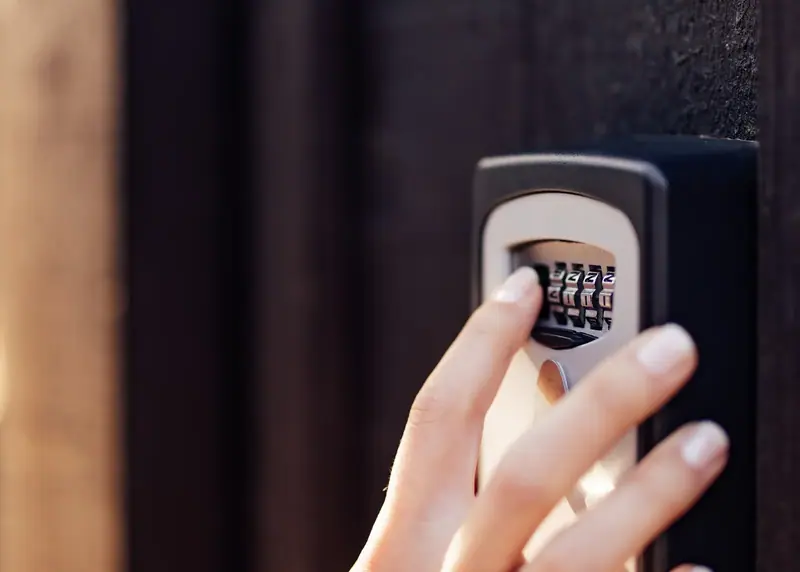
Before automatic openers were common, every garage door had a lock: a handle in the middle of the door that threw a pair of bars out into the tracks. Many doors still have one. Others have a slide bolt on the inside, a keyed release beside the door, or nothing but the opener holding them shut.
We repair and replace garage door locks for homes and outbuildings around Nashotah. It is small work, and getting it right matters for both security and the health of the door.
Types of garage door lock
T-handle with lock bars
A keyed handle on the outside connected to a mechanism inside. Turning it retracts two steel bars or cables that latch into slots in the vertical tracks.
Inside slide lock
A manual bolt mounted at one or both ends of a section that slides into a hole in the track. Operated only from inside.
Keyed emergency release
A small lock cylinder in the door with a cable to the opener's release. Lets you disengage the opener from outside in a power cut. Essential on garages with no other entrance.
Automatic opener deadbolt
An electrically operated bolt that engages every time the door closes and withdraws before it opens. Controlled by the opener.
Center-mount or side-mount keyed locks
Variations used on older and one-piece doors.
Padlock hasps and latches
On roll-up, shed and outbuilding doors.
How the opener itself secures the door
It is worth understanding what an opener does and does not do. When the door is closed, the opener's drive holds the trolley in place, and the door cannot be lifted from outside without first disconnecting it. For most homes that is adequate, provided the emergency release is not easy to reach through the top of the door and the remotes are secure.
A separate lock adds a physical barrier that does not depend on the opener. That is valuable for doors with no opener, for detached buildings, and for homes left empty for a time.
Common lock problems
| Problem | Usual cause |
|---|---|
| Key will not go in or turn | Worn or corroded cylinder, frozen lock, or a worn key |
| Handle turns, door stays locked | Broken cable or linkage inside |
| Handle turns, door will not lock | Bars or latches not reaching the track slots, or a broken spring latch |
| Latch misses the slot | Track has shifted, or the door has sagged or been adjusted |
| Lock bar bent | The door was operated with the lock engaged |
| Slide lock stiff or seized | Rust and lack of lubrication |
| Top section bent or torn | The opener was run against an engaged lock |
| Keyed release cable snapped or seized | Corrosion, or the cable has been pinched |
| Key lost | Cylinder needs rekeying or replacing |
The lock and opener conflict
This deserves its own section, because it is the cause of some expensive damage.
If a manual lock is engaged and someone presses the opener button, the motor pulls on a door that cannot move. Something yields. Usually it is the top section, which bends or tears at the opener bracket. Sometimes it is the opener's gear, the door arm or the lock bars themselves.
It happens most often when a visitor, a child or a well-meaning house-sitter slides the lock without anyone else knowing.
There are three sound ways to prevent it:
- Remove or disable the manual lock on any door that is operated daily by an opener. This is what most opener manufacturers instruct.
- Fit an interlock that cuts the opener's circuit while the lock is engaged.
- Use an automatic deadbolt designed for the opener, which the opener controls directly.
If you want to keep a manual lock for holidays, make a habit of unplugging the opener or using its vacation lock whenever the manual lock is thrown.
How we repair or replace a lock
- 01
Identify the lock type and the fault
We check the handle, cylinder, linkage, bars or cables, latches and the track slots.
- 02
Check the door's alignment
A latch that misses its slot is frequently a symptom of a door or track that has moved. We correct that first.
- 03
Repair or replace parts
Cylinders, handles, cables, bars, spring latches or the complete lock set, as needed.
- 04
Rekey if required
A new cylinder gives you new keys. We can often key it alike with another lock.
- 05
Lubricate
Lock cylinders get a dry lubricant. Linkages and slides get a light garage door lubricant.
- 06
Sort out the opener relationship
The lock is disabled, interlocked or replaced with an automatic deadbolt, according to how the door is used.
- 07
Fit or repair the emergency release
On garages with no other entry, we make sure there is a working keyed release.
- 08
Test
The lock is operated repeatedly from both sides, and the opener is tested with the final arrangement.
Before & after
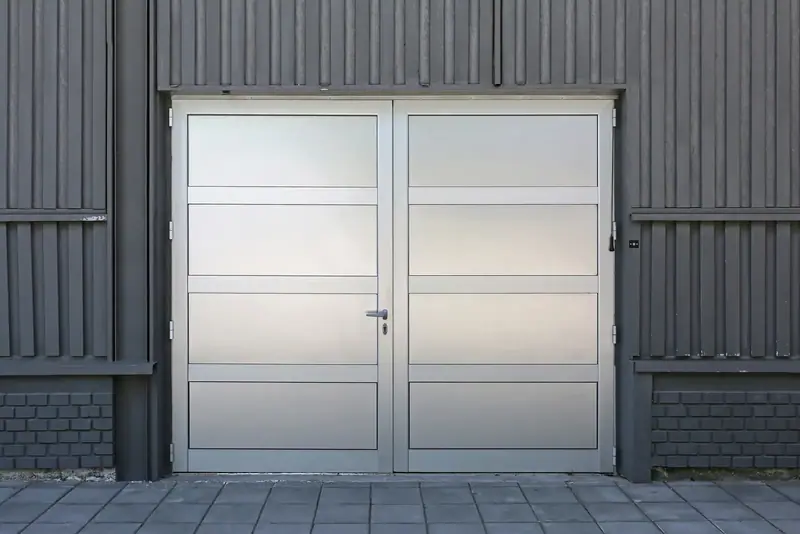
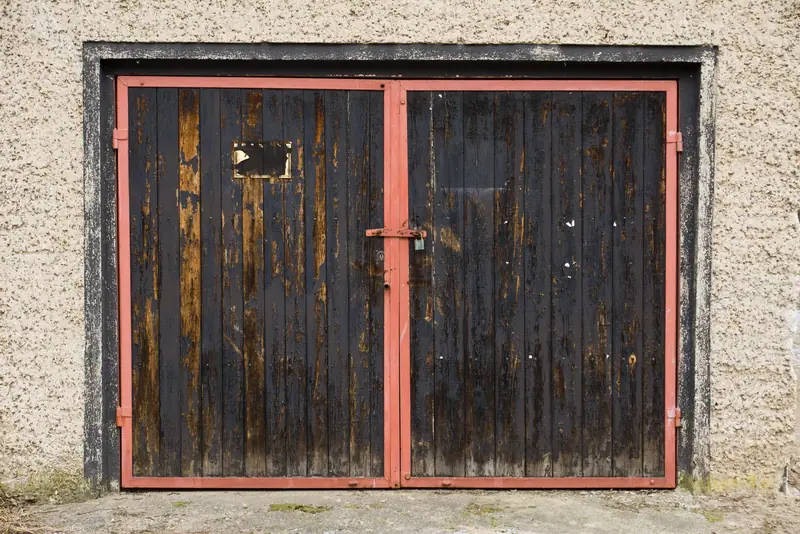
A broken latch on old wooden doors compared with a new lock and handle
Project notes
The first image shows a pair of old doors held shut by a latch that has long since stopped doing its job. The metal is rusted, the bolt is bent and the fixings have pulled loose from the weathered wood. Anyone could open it with a firm tug.
The comparison illustrates a door with a new, properly fitted lock and handle. On a garage door, the repair might be a new T-handle and lock cylinder, replacement lock bars or cables, a new slide lock, or realignment so the latch actually engages the track. On doors with an opener, the lock is either removed, interlocked, or replaced with an automatic deadbolt that works with the opener.
The door now stays shut against a pull from outside, the key turns freely, and there is no risk of the opener driving against an engaged lock and tearing the door.
Illustrative example. These are licensed reference photographs chosen to show the kind of change this service makes. They are not photos of a specific Nashotah Garage Door customer's property.
Choosing what suits your garage
Attached garage with an opener, used daily. Rely on the opener, shield the emergency release from being hooked from outside, and consider an opener with an automatic deadbolt if you want a physical lock. Put a good deadbolt on the door from the garage into the house.
Detached garage with an opener. As above, plus a keyed emergency release if the overhead door is the only way in.
Garage or shed with no opener. A working T-handle lock or a pair of inside slide locks is the main security. Keep it lubricated and check that both sides latch.
Seasonal property or long absences. An inside slide lock on each side, engaged when you leave, with the opener unplugged or locked out. Add a connected sensor so you know if the door moves. See smart opener installation.
Workshop or outbuilding with valuable contents. Slide locks both sides, a reinforced door, and attention to side doors and windows.
After a break-in. See break-in damage repair for a fuller list of measures.
The keyed emergency release
If your garage has no door other than the overhead one, and the power fails or the opener breaks, you are locked out unless the door has an external release. This is a small lock cylinder, usually near the top center of the door. Unlocking it and pulling the cable disengages the opener so the door can be lifted by hand.
They are often forgotten until needed, and by then the cylinder has corroded or the key has gone missing. We recommend testing it once a year. If your detached garage does not have one, it is an inexpensive addition.
Locks and the Wisconsin climate
Frozen cylinders. Moisture in an exterior lock freezes. Do not force the key, which can snap. Warm the key, use a lock de-icer, and afterward apply a dry graphite or PTFE lubricant. Oil-based sprays attract dirt and thicken in the cold.
Corrosion. Road salt and damp attack exposed lock parts. T-handles, release cylinders and slide bolts on lakeside buildings rust quickly. Stainless or plated replacements last longer.
Seasonal movement. Frost and humidity shift doors and frames slightly through the year. A latch that lines up in July may bind or miss in January. We set locks with a little tolerance.
Doors frozen down. A door frozen to the slab may be mistaken for a locked one, and the other way round. If the door will not move, check for an engaged lock and for ice before pressing the opener again.
Unused locks. Locks that are never operated seize. Work them a few times each season.
Can you do it yourself?
Lubricating a stiff lock and tightening a loose handle are simple jobs for a homeowner. Replacing a T-handle set is within reach of a handy person on a door without an opener.
It is worth having us involved when the latch does not line up, since the cause is usually in the door or track; when an opener is present and the lock needs to be made compatible with it; when a section has already been bent by the opener; or when you want an automatic deadbolt or keyed release fitted and wired correctly.
Frequently asked questions
Not for everyday use. If the opener runs with the lock engaged, it can damage the door. Remove or interlock the lock, or use it only when the opener is unplugged or locked out.
Do not force it. Try a dry lock lubricant, and a de-icer if it is frozen. If it still will not turn, the cylinder is worn or corroded and should be replaced.
The cylinder can usually be replaced or rekeyed, and often matched to another key you already use.
A small external lock that lets you disconnect the opener from outside, so the door can be opened by hand during a power failure. It is important for garages with no other entry.
They add a physical lock that engages every time the door closes, with no risk of forgetting or of the opener fighting it. They require a compatible opener.
Often, with a reinforcing strut and a new opener bracket. If the section is creased, it will need replacing. See panel repair & replacement.