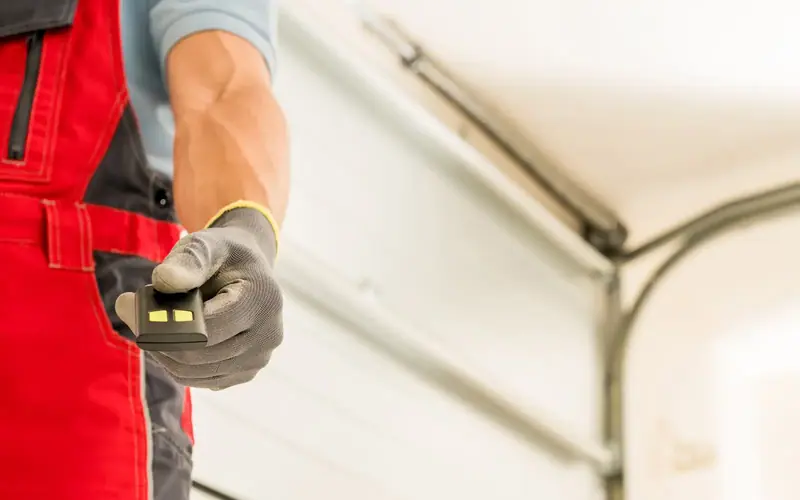
In principle, programming a garage door remote takes thirty seconds. In practice, people lose an evening to it. The learn button is not where the manual says. The car's built-in button refuses to take the code. The new universal remote is not as universal as its packaging claimed.
We program remotes, keypads and vehicle controls for homeowners around Nashotah, and we fix the cases where they will not program at all.
What we can set up
Handheld remotes
Visor and key-ring remotes, original or compatible replacements, single or multi-button.
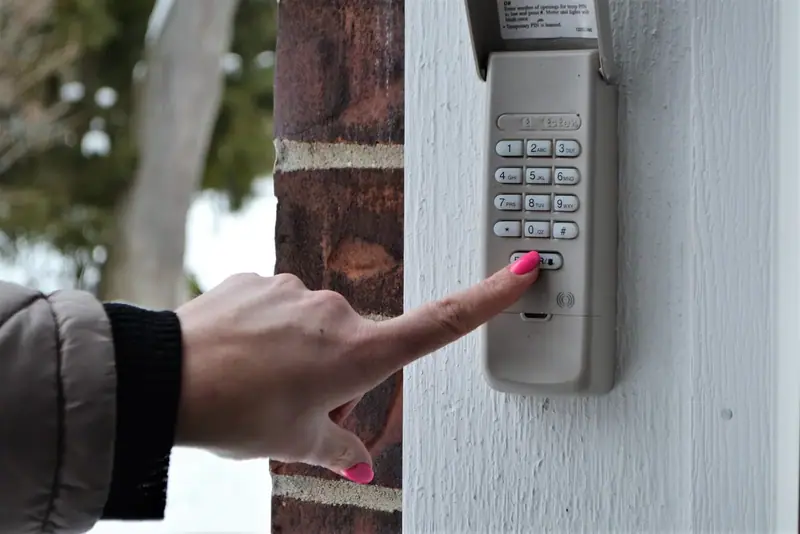
Wireless keypads
Mounted outside the door so family can get in with a code instead of a remote.
In-vehicle buttons
The transmitter built into the mirror or overhead console of many cars.
Wall consoles
Replacement or upgraded wall controls with lock, light and timer functions.
Phone apps
Pairing a phone with a connected opener. See smart opener installation.
Multiple doors
One remote programmed for two or three doors, or for a gate as well.
A short guide to opener radio systems
Understanding why remotes are not interchangeable saves a lot of frustration.
| Generation | How it works | What it means |
|---|---|---|
| Fixed code with switches | A row of tiny switches inside the remote and the opener are set to the same pattern | Old, easily copied. Replacement of the opener is advised. |
| Fixed code, learned | The remote has a single factory code the opener memorizes | Better, though still able to be recorded and replayed |
| Rolling code | The code changes with every press, in step with the opener | Secure. Standard on openers for many years. |
| Newer encrypted rolling code | Updated rolling code on multiple frequencies to resist interference | Current standard. Older remotes will not work with these. |
Each manufacturer has several generations, often identified by the color of the learn button on the opener. A remote has to match the brand and the generation. A universal remote covers many, never all.
How programming usually works
For a typical rolling-code opener, the steps are simple.
- Find the learn button on the motor unit, usually on the back or side near the antenna wire, sometimes under the light cover.
- Press and release it. An indicator light comes on for about thirty seconds.
- Within that window, press the button on the new remote.
- The opener's lights flash or it clicks to confirm.
- Test the remote.
For a keypad, you enter the code you have chosen and press enter during the same thirty-second window. Variations exist by brand and age, which is where the trouble starts.
When it will not program
These are the causes we find most often.
- Wrong remote for the opener. The brand matches, the generation does not.
- Memory is full. Openers store a limited number of devices. Old entries must be cleared.
- The learn button was held too long. On many units, holding it for several seconds erases every stored remote.
- Weak battery in the new remote. Not unheard of, even straight from the package.
- The wall console's lock is on. A lock or vacation mode blocks all remotes.
- Radio interference. Something nearby is drowning the signal. More on this below.
- A faulty receiver or logic board. If nothing will pair, the opener's radio may have failed.
- The vehicle needs an extra step. Car systems often need a bridge procedure or a compatibility adapter for newer openers.
Programming the button in your car
Built-in vehicle transmitters are the most common source of calls. The general process has two stages.
- 01
Clear the car's buttons
On most vehicles, holding the two outer buttons until the indicator flashes clears previous programming. Check the owner's manual for your model.
- 02
Teach the car your remote
Hold the handheld remote a few inches from the car's buttons and press both the remote and the chosen car button until the indicator changes.
- 03
Put the opener into learn mode
Press the learn button on the motor unit.
- 04
Finish from the car
Within thirty seconds, press the programmed car button two or three times, pausing between presses, until the door moves.
- 05
Test it
Operate the door from the driveway.
For rolling-code openers, the last two steps are essential, and they are the ones people miss. Some newer openers use a radio system that older vehicles cannot speak to directly. In that case a small adapter, plugged in at the opener, translates between the two. We carry them for the common combinations.
Before & after
Worn, unreliable key fobs compared with a new programmed remote
Project notes
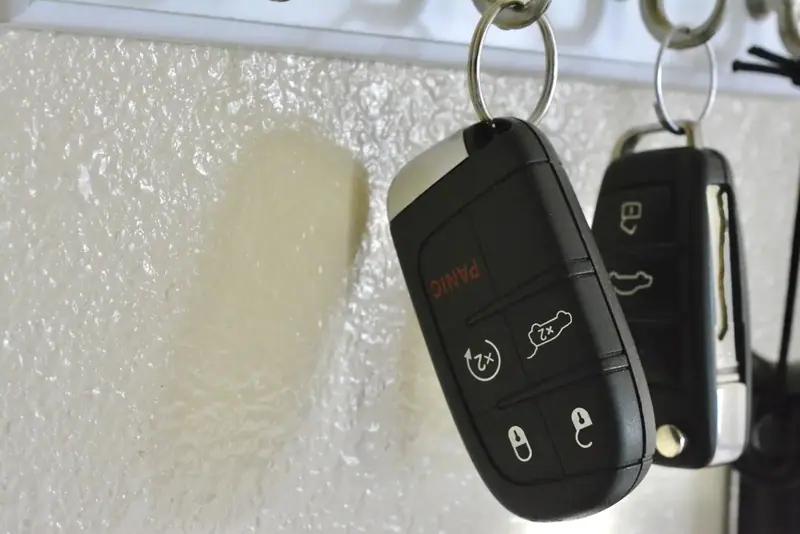
The first image shows remotes that have had a long life on a key ring: buttons worn smooth, cases cracked, contacts tired. A remote like this works on the third press, or only from the end of the driveway, and its owner has usually stopped trusting it.
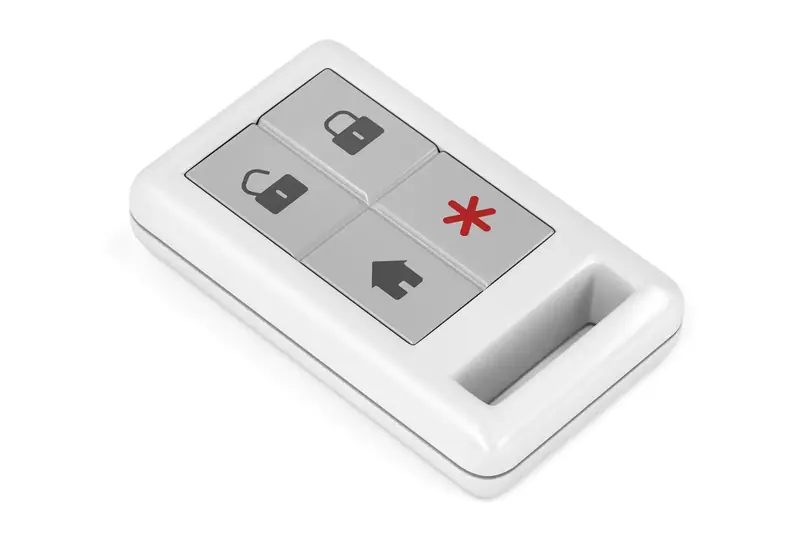
The comparison illustrates a new multi-button remote. Programming it means putting the opener into learn mode and pairing the new device, then testing it from the distance you actually use it. Where remotes have been lost, we clear the opener's memory first so nothing unaccounted for can still open the door.
The benefit is a door that opens the first time you press the button, from the car, at the range it should. Just as important, you know exactly which remotes and codes can operate it.
Illustrative example. These are licensed reference photographs chosen to show the kind of change this service makes. They are not photos of a specific Nashotah Garage Door customer's property.
Lost or stolen remotes
A remote left in a car that has been broken into, sold or traded is a key to your house. The fix is quick.
We erase the opener's memory, which wipes every stored remote and keypad code at once. Then we reprogram only the devices you still have. The missing remote is now useless. If your keypad code has been shared widely over the years, this is a good time to change that as well.
When you buy a home, do the same. You have no way of knowing how many remotes the previous owners handed out.
Range problems and interference
A remote that used to work from the street and now works only from the apron has not usually gone bad. Something is interfering with the signal. Suspects include:
- LED bulbs in or near the opener. Some inexpensive LED lamps emit radio noise that swamps the receiver. Swapping to opener-rated LED bulbs often restores full range at once.
- A damaged or tucked-up antenna. The short wire hanging from the motor unit should hang straight down, undamaged.
- New electronics. Chargers, wireless equipment, security cameras and some light fixtures added to the garage.
- A weak remote battery.
- A failing logic board, if range has declined steadily and nothing else explains it.
We track it down by elimination, starting with the cheapest causes.
Keypads: getting the most from them
A wireless keypad is one of the most useful and least expensive additions to a garage door.
- Mount it out of the direct weather where possible, at a comfortable height.
- Choose a code that is not your house number, birth year or 1-2-3-4.
- Change the code occasionally, and always after sharing it with a contractor.
- Many keypads allow a temporary code that expires after a set time or number of uses. Useful for guests and deliveries.
- Replace the battery every year or two. Cold shortens its life.
Remotes, keypads and Wisconsin cold
Batteries. Cold reduces battery output. A remote left in a car overnight at ten below may not transmit until it warms up. If this happens regularly, fit a fresh battery before winter. Keypad batteries, mounted outdoors, suffer even more.
Keypad buttons. Rubber keys stiffen and ice can form over the face. A keypad with a flip-down cover does better. Clear ice gently and avoid chipping at it.
Condensation. Moving a remote between a freezing car and a warm house can cause moisture inside the case. If a remote behaves erratically in winter, open it, dry it and clean the battery contacts.
Opener electronics. The receiver in the motor unit is designed for unheated spaces and is rarely the weak point.
Why call us for something this small
Often you will not need to. If you have the right remote and the manual, try it. We are glad to explain the steps by phone.
We earn our fee on the stubborn cases: identifying exactly which remote your opener accepts, clearing a full or corrupted memory, getting a reluctant car to cooperate, tracing interference, or recognizing when the opener's receiver has failed and no amount of button pressing will help. We also carry remotes and keypads for the common opener generations, so the right part arrives with us. And when we are on site, we take a few minutes to check the door's safety sensors and reversal, because we would feel wrong leaving without doing so.
Frequently asked questions
You need the opener's brand and model, or the color of its learn button, which indicates the radio generation. Tell us what you have and we will match it.
In most cases, yes, using the learn button on the motor unit. If it will not pair, the remote may be the wrong type or the opener's memory may be full.
The opener's memory is cleared, which erases all remotes and keypad codes, and then your remaining devices are reprogrammed.
The usual causes are a weak battery, interference from LED bulbs or new electronics, or a damaged antenna on the opener.
Rolling-code openers need an extra step at the opener's learn button, and some newer openers need a compatibility adapter for older vehicles.
Yes. Multi-button remotes can be programmed with a different door on each button, provided each opener is compatible.