Southeastern Wisconsin does not get hurricanes, but it gets plenty of weather. Summer thunderstorms with straight-line winds. The occasional tornado warning. Hail. Heavy, wet spring snow that brings down branches. Ice storms. Winter gales off open water.
Garage doors take a share of all of it. We repair storm and wind damage for homeowners and businesses in the Nashotah area, and we try to leave each door better prepared than we found it.
Why garage doors are vulnerable
A double garage door presents well over a hundred square feet of surface to the wind. It is held in place only by rollers in two tracks and by its own stiffness. Under strong wind pressure, a light door bows inward at the center. If it bows far enough, the rollers are pulled out of the tracks and the door fails.
When a large door fails in a severe storm, wind enters the garage and pressurizes it, which puts additional stress on the roof and walls. That is the reason building codes in high-wind regions require reinforced doors. Our local requirements are less severe, but the physics is the same, and a stronger door is always a safer one.
Types of storm damage
| Cause | Typical damage |
|---|---|
| High wind | Bowed or buckled sections, rollers out of track, bent track, torn weatherstripping |
| Falling limbs and trees | Crushed or creased sections, bent track, damaged header and trim |
| Wind-blown debris | Dents, punctures, broken glass |
| Hail | Rows of small dents across the face, chipped finish, cracked window frames |
| Heavy snow and ice | Door frozen down, top section bent by the opener, seals torn |
| Roof snow sliding off | Impact damage to the top of the door and trim |
| Driving rain and flooding | Water under the door, swollen wood, rusted bottom section, saturated insulation |
| Lightning and power surges | Failed opener logic board, sensors or wall control |
| Power outage | Door inoperable, sometimes left open or partly open |
After the storm: what to do
- 01
Stay safe
Keep away from downed lines and unstable trees. Do not enter a damaged structure until you are sure it is sound.
- 02
Look before you operate
Check the door from inside and out for bowing, gaps, rollers out of the track, bent track or loose cables.
- 03
Do not run a damaged door
If anything looks wrong, leave it. A bowed or off-track door can fall.
- 04
Photograph everything
Take wide and close shots of the door, track, opener and surrounding structure before any cleanup.
- 05
Protect the opening
If the door cannot be closed, cover exposed contents and lock the door into the house.
- 06
Contact your insurer
Report the damage and ask what they need.
- 07
Call us
We will assess it, make it safe and give you a written estimate.
How we assess storm damage
Storm damage is often more than it appears. We check:
- Each section for creases, bowing, dents, cracks at the stiles and delamination.
- Struts and reinforcement. Whether they are present, bent or pulled loose.
- Track, both vertical and horizontal, for bends and loosened fixings.
- Rollers, hinges and brackets for distortion.
- Springs, cables and drums. A door that has been racked can leave a cable slack or off its drum.
- The opening. Jambs, header, trim and the framing the track is fixed to.
- Seals all round.
- The opener, including surge damage to electronics.
- Glass and frames.
You get a plain description of what is damaged, what is cosmetic and what is structural.
Repair options
Section replacement
One or two damaged sections are replaced with matching ones where the model is still available.
Reinforcement
Horizontal struts are added to stiffen sections that flexed but did not crease.
Track repair
Bent track is replaced and all fixings are re-secured into sound framing.
Hardware renewal
Bent hinges, damaged rollers and stretched cables are replaced, and the door is rebalanced.
Seal replacement
Torn bottom seals and perimeter weatherstripping are renewed.
Glass replacement
Broken lites and frames are replaced.
Opener repair
Surge-damaged boards and sensors are replaced, or the opener is replaced if it is old.
Full door replacement
When several sections are damaged, the door is discontinued or the cost of repair approaches that of a new door.
Hail
Hail is a particular case. Dents are usually cosmetic, and the door still works. Whether to replace sections is largely a matter of appearance and your insurance cover. Steel that has dented has stretched, so dents cannot be made to disappear completely. We will tell you plainly whether the door's function is affected.
Before & after
A weather-beaten door compared with a restored opening
Project notes
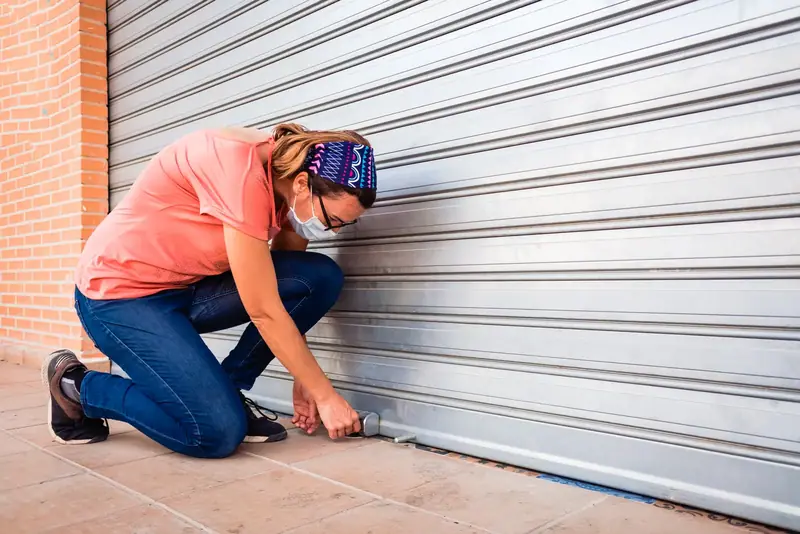
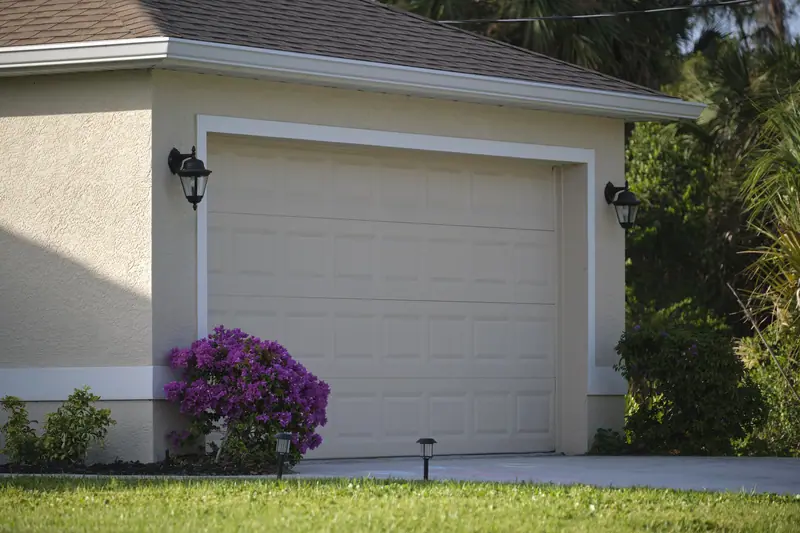
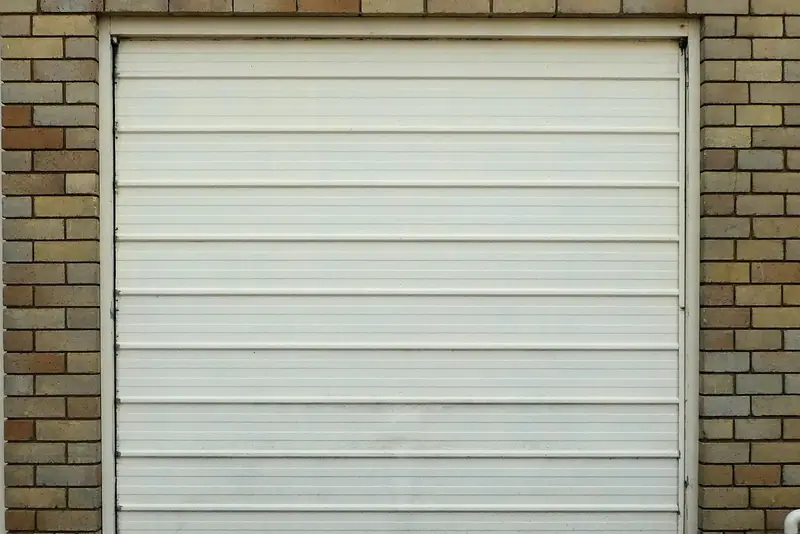
The door in the first image has taken years of weather. The surface is worn and streaked, and the edges no longer meet the brick opening, leaving gaps that let wind and water through. After a severe storm, a door in this condition is often the first thing to give, because it had no margin left.
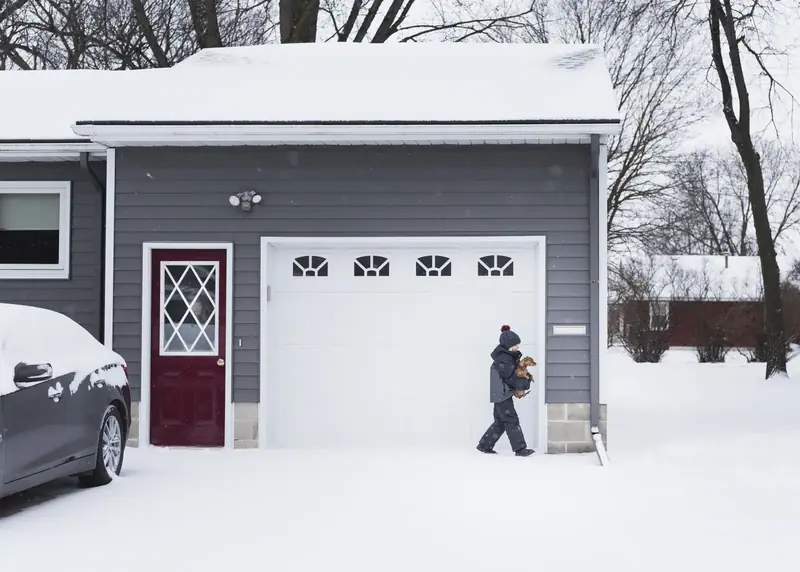
The comparison illustrates an opening put right: a new, properly fitted door sitting square in its frame with its seals in contact all round. Depending on the damage, storm repair may involve replacing bowed or dented sections, renewing bent track, adding reinforcing struts, replacing torn seals and repairing the opener. When the door is beyond economic repair, replacement is the outcome.
The gains are a door that keeps the weather out and stays in its tracks, and, where struts and better seals have been added, one that will stand up to the next storm rather better than the old one did.
Illustrative example. These are licensed reference photographs chosen to show the kind of change this service makes. They are not photos of a specific Nashotah Garage Door customer's property.
Building in more resistance
Repair is the moment to make the door stronger.
Add struts. A strut on each section of a wide door greatly reduces bowing. It is inexpensive. Because struts add weight, we rebalance the springs afterward.
Choose a stiffer door. If the door is being replaced, a triple-layer insulated door is far more rigid than single-skin steel. Wind-rated doors with heavier track, more struts and stronger brackets are available for exposed sites.
Secure the track. Track fixed with proper lags into solid framing, with braced rear hangers, holds the rollers where a loosely fixed track lets go.
Use long-stem rollers and heavier hinges on wide doors, so the rollers stay engaged when the door flexes.
Maintain the seals. Intact weatherstripping reduces the wind getting behind the door and keeps driven rain out.
Protect the opener. A surge protector on the outlet is cheap insurance against lightning-induced surges.
Look up. Have overhanging limbs trimmed back from the garage and driveway.
Storm and seasonal damage around Nashotah
Lake exposure. Properties facing open water on Okauchee, Pine, Nagawicka and the Nashotah lakes take stronger wind than sheltered streets a quarter mile inland. Garage doors and boathouse doors on the windward side benefit most from reinforcement.
Wooded lots. Mature oaks and maples are part of the appeal here, and part of the risk. Limb strikes on garage doors and roofs follow most severe storms.
Wet spring snow and ice. Heavy snow in March and April loads branches while they are still brittle. Ice storms do the same. Both tend to cause outages as well.
Roof avalanches. Metal and steep roofs shed snow in sheets. If the garage door is below, the top section and trim can be struck.
Frozen doors. After a thaw and refreeze, the bottom seal bonds to the slab. Running the opener bends the top section. Free the seal first.
Summer storms. Straight-line winds and hail are the main summer causes of door damage, along with surges that take out opener electronics.
Flooding and runoff. Garages at the bottom of sloped driveways take water under the door in cloudbursts. A threshold seal and attention to drainage help.
Dealing with insurance
Storm damage to a garage door is commonly covered under homeowner policies, subject to the deductible and the specifics of your cover. We are not adjusters and cannot tell you what your policy will pay. What we can do is make the process easier.
- Provide a written, itemized estimate.
- Describe the damage and its probable cause clearly.
- Note whether damaged sections can be matched, which affects whether partial or full replacement is appropriate.
- Meet the adjuster on site if that is helpful.
Keep your photographs, and avoid disposing of damaged parts until your insurer has confirmed they do not need to see them.
Why a professional assessment matters
A storm-damaged door can look usable and not be. Sections that have bowed and sprung back may have cracked at the stiles. A track that looks straight may have loosened at every bracket. A cable may be sitting on the edge of its drum. Operating the door in that state risks bringing it down.
We check the whole system, make it safe, and tell you honestly what needs doing now, what can wait and what is only cosmetic. If a repair will hold, we will recommend the repair.
Frequently asked questions
Only if you can see no bowing, gaps, bent track or loose cables and it moves normally. If anything looks or sounds different, stop and have it checked.
If the sections flexed without creasing, struts can often restore and stiffen them. Creased sections need replacing.
Often, depending on your policy and deductible. Contact your insurer. We can supply an itemized estimate.
They can sometimes be improved but not removed entirely. Affected sections can be replaced if appearance matters or cover allows.
A power surge has probably damaged the logic board or the sensors. These can usually be replaced. A surge protector helps prevent a repeat.
Add reinforcing struts, ensure the track is solidly anchored, keep the seals in good order, and consider a triple-layer or wind-rated door when replacing.